Wed 2 Apr 2014, 20:48 GMT

Seattle wins Clean Air Excellence Award


US port is presented with award in recognition of its work in reducing maritime-related emissions.


The U.S. Environmental Protection Agency (EPA) has presented the Port of Seattle with a 2014 Clean Air Excellence Award today in recognition of its Seaport Air Quality Program.

Eight other initiatives and one individual were also given awards, which recognize innovative programs that protect Americans' health and the environment, educate the public, serve their communities and stimulate the economy.

"The Port of Seattle thanks the EPA for their recognition of our environmental initiatives," said Tay Yoshitani, Port of Seattle CEO. “Our staff has worked closely with local organizations and businesses to insure that our programs have a positive impact on both air quality and economic growth for our region."

The Port of Seattle was given the award in the 'Regulation/Policy Innovations' category for its work in successfully reducing maritime-related emissions through programs that exceed laws and regulations. The port worked collaboratively with regulatory agencies, neighboring ports, the maritime industry, and the community to reduce air emissions.

The resulting programs include the At-Berth Clean (ABC) Fuels initiative, Green Gateway Partner Awards, the Clean Truck Program, and promoting shore power use for cruise vessels while moored at port terminals.

The awards program, established in 2000 at the recommendation of the Clean Air Act Advisory Committee, recognizes and honours both individuals and organizations that have undertaken the risks of innovation, served as pioneers in their fields, advanced public understanding of air pollution and improved air quality. Entries are judged by EPA and the Clean Air Act Advisory Committee.

Bermuda Container Line (BCL) logo. Bermuda Container Line imposes emergency bunker surcharge citing Iran War fuel price spike  

Shipping operator to add $150 per TEU charge from 1 May amid geopolitical fuel cost pressures.

China flag. Zhejiang’s first methanol-powered container ship launches in Jiaxing  

Vessel uses methanol propulsion technology to reduce carbon dioxide emissions by 90%.

TES flag with a model vessel in the background. TES joins SEA-LNG coalition to advance e-methane as marine fuel  

Green energy company targets 1m tonnes annual e-methane production by 2030 for shipping decarbonisation.

Ethanol and methanol workshop graphic. IBIA to host workshop on ethanol and methanol marine fuels during Singapore Maritime Week  

Half-day event will examine alcohol-based fuel pathways and integration into shipping’s multi-fuel landscape.

Steel-cutting ceremony for 13,000-dwt vessel. ROC begins construction of second chemical tanker for Essberger  

Chinese shipbuilder holds steel-cutting ceremony for 13,000-dwt methanol-ready vessel with ice class capability.

Norsepower and CHIC sign agreement. Norsepower and Cosco Shipping Heavy Industry Equipment sign wind propulsion cooperation agreement  

Wind propulsion technology provider partners with Chinese shipyard to scale rotor sail production.

Wärtsilä logo. Shipping firms struggle to prioritise decarbonisation investments amid regulatory uncertainty, Wärtsilä survey finds  

Survey of 225 maritime executives reveals 70% say uncertainty hinders investment decisions despite regulatory pressure.

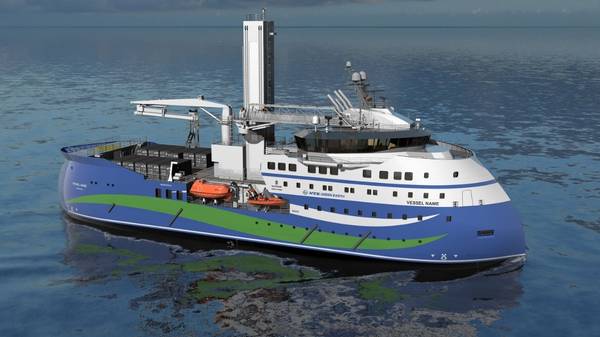
IMT Isca G-Flex vessel render. Longitude Engineering unveils IMT Isca G-Flex PSV design with alternative fuel capability  

Naval architecture firm launches adaptable platform support vessel design based on the IMT-984 G-Class hull.

Philippos Ioulianou, EmissionLink. Shore power infrastructure is key to cutting ferry emissions in European cities, says EmissionLink  

Port electrification is needed to enable vessels to switch off engines at berth, reducing urban pollution.

Maritime and Port Authority of Singapore logo. Singapore prioritises maritime resilience amid geopolitical uncertainty, eyes digitalisation and green fuels  

MPA chief outlines the sector’s adaptation to supply chain disruptions while advancing automation and alternative fuels.