Wed 15 Jan 2014, 15:04 GMT

EnergySail passes lab tests


Japanese firm eyes commercial production once sea trials have been completed.


Eco Marine Power (EMP) has announced that its innovative rigid sail technology for ships - the EnergySail - has passed a range of function tests which were conducted at the Aquarius Innovation Lab in Osaka, Japan.

The EnergySail is a renewable energy platform for shipping, designed by EMP, that is able to harness the power of the wind and sun. The EnergySail can be used either as a stand-alone device or as part of a larger array of up to eight EnergySail's or more.

During lab testing a number of unique features incorporated into the design of the patent-pending EnergySail were evaluated, including a device to protect the EnergySail from sudden strong wind gusts. Also confirmed during testing were the control algorithms which will be used to fully automate the operation if the EnergySail via a computer control system, which is being developed jointly between KEI System Ltd. of Osaka, Japan and EMP.

"The completion of these lab tests is a significant milestone for the EnergySail development project and clears the way for the commercial production of the EnergySail once sea trials have been completed. It also paves the way for the commercial deployment of the Aquarius MRE System which will use an EnergySail array to reduce fuel consumption on ships such as passenger ferries, cruise ships, bulk ore carriers and oil tankers," EMP said.

"We are extremely pleased with the test results which have confirmed that we made the right design choices regarding the EnergySail and the devices that will be connected to it," remarked Greg Atkinson, Director at Eco Marine Power. "We have also been encouraged by some very positive feedback that we have received from a number of shipping companies and the increasing interest from companies & organisations around the world in the technologies we are developing".

The next major step forward for the EnergySail project will be sea trials which are scheduled to start in 2014. Design work on the EnergySail which will be used for this phase has already started and confidential discussions with a major shipping company regarding co-operation during these trials are said to be in progress.

The lab testing phase for the EnergySail was supported by the Japan Ship Machinery & Equipment Association (JSMEA).


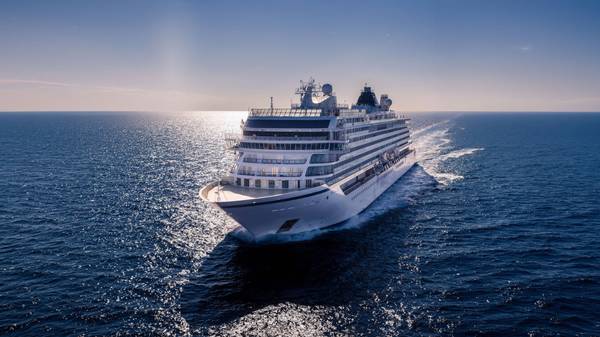
Viking Libra vessel. Fincantieri delivers hydrogen fuel cell cruise ship to Viking  

Viking Libra fitted with hybrid propulsion system that uses liquefied hydrogen and fuel cells.

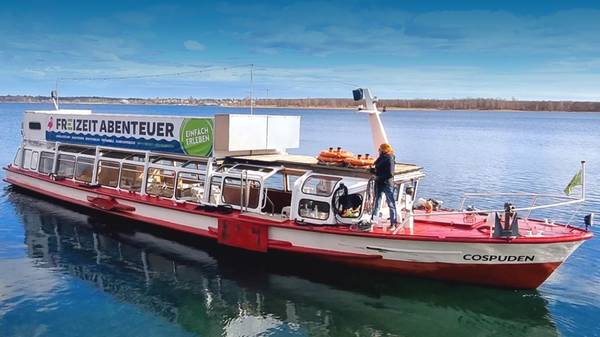
Cospuden vessel. Historic Hamburg passenger vessel to be retrofitted with electric propulsion in Saxony  

1958-built MS Cospuden is being converted to battery power for operation in Germany's Leipziger Neuseenland.

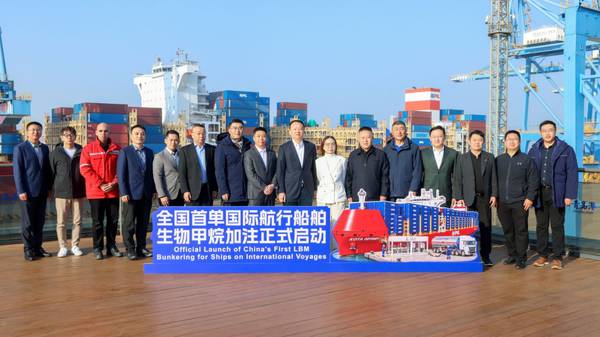
Launch of LBM bunkering for ships on international voyages. PIL claims China's first liquefied biomethane bunkering at Qingdao  

Kota Odyssey bunkers LBM in what is said to be a first for Chinese ports.

Sekavin S.A. logo. Sekavin seeks deck officers for bunker barges in Piraeus  

Greek physical supplier is recruiting experienced officers for its bunkering fleet.

OPS system at Grimaldi Terminal Barcelona. Port of Barcelona tenders for single concessionaire to build ship electrification network  

Port authority seeks public-private partnership to complete onshore power supply infrastructure under €1.7bn energy transition plan.

MAmmoSS graphic. Mitsubishi Shipbuilding to supply ammonia fuel handling system for Japan's first ammonia-fuelled car carriers  

MAmmoSS system chosen for four vessels under a seven-company ammonia fuel supply chain project.

CMA CGM and SMF sign MoU. CMA CGM deepens Singapore ties with talent, innovation and bunkering trials  

French carrier signs new agreements with Singapore maritime bodies covering scholarships, startups and alternative fuels.

United States flag. Sallaum Lines to deploy LNG-fuelled Ocean Class vessels after securing two-year contract extension  

Ocean shipper extends US manufacturer contract in $60m roll-on/roll-off deal.

Two vessels at sea. WSC report says dual-fuel fleet to account for more than 20% of liner energy demand by 2030  

New analysis points to growing potential demand for renewable fuels from container ships and vehicle carriers, but warns that regulation is needed to close the price gap.

RS Atlantico vessel. Suardiaz adds dual-fuel PCTC RS Atlantico to Atlantic Line  

Spanish logistics operator expands automotive shipping capacity with LNG dual-fuel vessel on Europe–Morocco route.