Thu 9 Jan 2014, 16:38 GMT

Emulsion fuel update


Developer issues update on its principal project programmes to the year ending December 2013.


Source: Quadrise Fuels International Plc (QFI)

Quadrise, the emerging supplier of MSAR®, a low-cost alternative to fuel oil in the shipping, refining, and power generation markets, is pleased to issue this update on its principal project programmes to the year ending December 2013.

Marine MSAR®2

The fuel required for the 'proof of concept' seaborne programme was loaded in November for supply to two Maersk ships equipped with Wärtsilä and MAN Diesel two stroke propulsion engines respectively. The fuel will be used periodically in a series of programmes involving specific operations and load conditions that will lead to final approval to commence the next phase.

The seaborne programmes are substantially independent. The Wärtsilä programme is under way and at sea. The MAN Diesel programme awaits results from a precursor land-based engine test required to provide settings for optimal seaborne operation. The land-based test has unfortunately been delayed due to external factors not related to Quadrise, and the required information may not be available before end-January 2014.

The 'proof of concept' confirmation will signal the transition to commercial operations and the determination of contractual terms between the parties - Quadrise International Limited ("QIL"), the refiner and the shipping company. The first joint activity will involve installation of manufacturing capacity and production of Marine MSAR®2 fuel to provide for up to 4,000 hours of seaborne performance data collection on each engine type.

This resulting data is expected to support the issue of Letters of No Objection ("LONOs") to be supplied by the respective engine manufacturers for the use of Marine MSAR®2 in the engine types concerned. These are the latest two stroke main propulsion engines used in the largest container ships, most modern oil tankers and dry cargo bulk carriers.

Saudi Arabia

Saudi Aramco has designated a very large refinery for the first installation for commercial production. Selection was based on both scale of opportunity and ease of supply to a major steam and power generation facility located on the same site, and integrated operationally with the refinery.

QIL and Aramco have agreed that the first step should be a 'commercial pilot plant' which, on success will form the first production module of a significantly larger scale operation.

Quadrise and the Rafid Group are in discussion with Aramco on concluding the terms for supply of QIL services and resources for the MSAR® plant installation, and fuel supply and use at nearby power plants.

South America

The current focus is on the Joint Feasibility Study with Ecopetrol for supply of MSAR® fuel into the South and Central American power and marine markets.

In December QIL participated in a joint on-site review at the nominated Ecopetrol refinery to determine a preferred location for the MSAR® Manufacturing Unit ("MMU") and re-confirm the estimated manufacturing economics. Refinery residue samples are en-route to the MSAR® research facilities to confirm their suitability for MSAR® manufacturing.

The next phase of the study will be to finalise the installation costs, review logistics and identify the prospective client base in the power generation and marine markets. This activity is expected to be completed during the next six months.

Global Major

QIL and the Global Major have confirmed that residue may be available on a multi-site basis and could be processed into MSAR® fuel for either thermal power or marine applications. It is therefore prudent to await the marine 'proof of concept' confirmation as described in more detail above before discussing the next steps in the programme. Assured future Marine MSAR® fuel demand will affect the preferred direction of the programme for the next phase, and this should be clarified during 2014.

Corporate Resources

The active programmes have been both de-risked and broadened over the past year, with an increased number of ventures planned to enter the commercial phase over the next 24 months. This naturally has consequences for technical, commercial and operational management resources and for Group funding.

As regards staffing and structure, requirements have been defined and specialist consultants engaged to assist with selective personnel recruitment. The target is to complete recruitment by mid-2014 to ensure capacity to support all key programmes and maintain a high standard of professionalism across a broader front.

As regards funding, the board of the Company (the "Board") has re-confirmed that debt finance will be precluded until production related revenues are contractually assured. As advised in the 2013 Annual Report, the combination of a broader portfolio of high quality projects, and the need for additional staff to support active programmes, have increased the call on available funds beyond that anticipated when QFI last raised additional equity in November 2012. The Board favours a prudent approach to funding in these circumstances by securing a reasonable reserve to cover all eventualities. It has become clear that additional equity funds should be raised in the current year, preferably before end March 2014. The anticipated level of fundraising will be within the existing shareholder approvals obtained at the AGM in November 2013.


Sing Fuels logo. Sing Fuels seeks Asia-based supply trader to bolster bunker procurement team  

Singapore bunkering firm is recruiting a supply trader to manage marine fuel purchasing across Asia.

MOL joint naming ceremony. MOL names world's first ammonia-fuelled Capesize bulk carriers  

Naming of Ruri Mirai, Ruri Sekai and Ruri Hikari signals ammonia's arrival as a marine fuel for large bulk carriers.

Washington State Hybrid-Electric 160-Auto Ferry vessel render. ABB wins Washington State Ferries' third hybrid-electric vessel order  

ABB extends its role in the US ferry operator's electrification programme, which targets emission-free operations by 2050.

Aurora Borealis vessel. Kawasaki Heavy Industries delivers LPG-fuelled carrier Aurora Borealis  

Ship could also be modified in future to allow for ammonia-fuelled operation.

Rendering of Estonia's first shore-charged electric ferry. Estonian State Fleet's shore-charged electric ferry completes model testing in Germany  

Hull and propulsion tests show the vessel's energy consumption remains within contracted limits with room to spare.

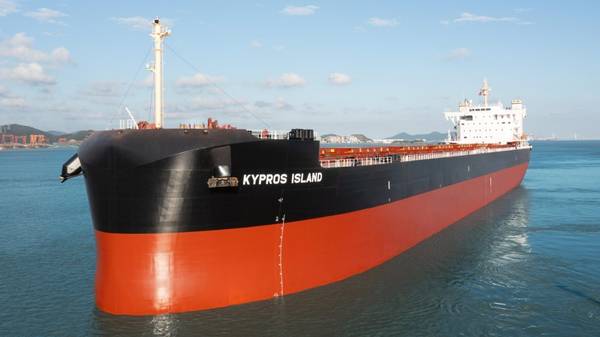
Kypros Island vessel. Tsuneishi delivers first methanol dual-fuel Kamsarmax bulk carrier from Chinese yard  

Shipbuilder claims progress towards establishing a mass-production system for vessels designed to reduce environmental impact.

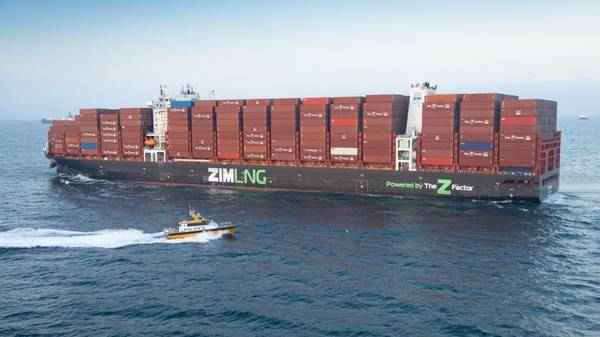
ZIM LNG container vessel. Los Angeles and Long Beach identify LNG and methanol as key near-term marine fuels  

Joint feasibility study maps out demand projections and infrastructure needs to support cleaner shipping fuels at San Pedro Bay

Alexander Treff, Christiania Energy, Christiania Energy welcomes student assistant to Copenhagen office  

Alexander Treff joins marine fuels firm while studying international business at Copenhagen Business School.

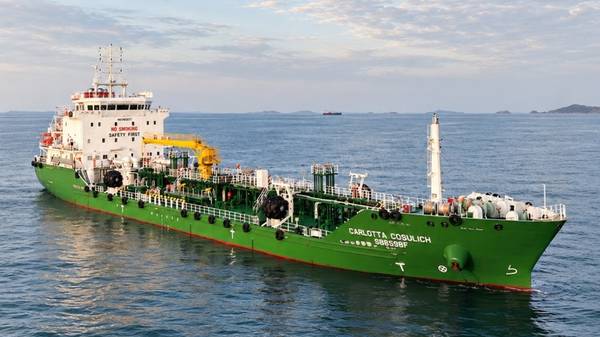
Carlotta Cosulich vessel. Cosulich Marine Energy takes delivery of third methanol-ready bunker tanker  

Carlotta Cosulich joins the group’s fleet, bringing its four-vessel bunkering programme closer to completion.

Rendering of a Wallenius Wilhelmsen vessel Wallenius Wilhelmsen orders four dual-fuel PCTCs, extends fleet renewal programme  

Shipping firm signs for LNG-fuelled car carriers with options for eight more, with deliveries from 2030.