This is a legacy page. Please click here to view the latest version.
Thu 15 Nov 2018, 00:01 GMT

Prexit: Another president leaves PetroChina - Singapore's second-biggest bunker supplier


Zhang Jianhua becomes second president to depart since April.


Image credit: Pixabay
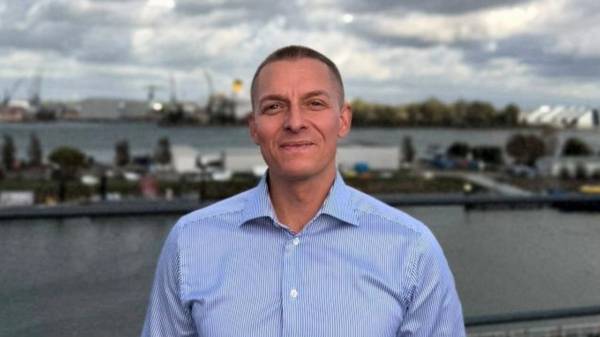
PetroChina Company Ltd - the parent company of Singapore's second-biggest bunker supplier, PetroChina International (Singapore) Pte Ltd - has announced the resignation of its president, vice-chairman and executive director, Zhang Jianhua, who vacates the role just over five months after his appointment became effective on June 5.

Local media sources on Wednesday were claiming that Zhang had landed the job of director of China's National Energy Administration (NEA).

In a statement, PetroChina said that Zhang had tendered his resignation "due to the adjustment of positions" at the firm and "he has no disagreement with the Company and the Board and there is no other matter that needs to be brought to the attention of the shareholders".

"Mr. Zhang ... has been dedicated, diligent and meticulous at work in continuously promoting the high-quality development of the Company and actively repaying shareholders and society since [his] appointment.

"The Board would like to express its sincere gratitude to Mr. Zhang Jianhua for his significant contributions."

Zhang has more than 30 years' experience of working in China's petroleum and chemical industry. In addition to his role at PetroChina, Zhang has also been serving as a director, general manager and deputy secretary of the Party Committee of China National Petroleum Corporation (CNPC) - the parent of PetroChina.

Additionally, Zhang was chairman of PetroChina's Investment and Development Committee.

Zhang's resignation follows the departure in April of Wang Dongjin, who also served as vice-chairman, president, director and chairman of the Investment and Development Committee, and was also said to have resigned "due to the adjustment of positions".

As reported in January, PetroChina subsidiary PetroChina International (Singapore) Pte Ltd jumped 10 places to become Singapore's second-largest bunker supplier by sales volume in 2017 - after being ranked 12th as a new entrant in 2016.

Incorporated in 2004, the company markets crude oil, refined oil products, natural gas and petrochemicals.

Back in 2009, the Singapore-based firm acquired Keppel's stake in Singapore Petroleum Company (SPC) - a supplier of marine fuels - and subsequently took over the business.

In PetroChina's last financial results for the third quarter, the company posted a year-on-year rise in shareholder net profit of 348.7 percent to RMB 21.035bn ($3.0bn) and an increase of 111.9 percent to RMB 63.323bn ($9.1bn) for the first nine months.


A Maersk vessel, pictured from above. Maersk and Hapag-Lloyd suspend Strait of Hormuz transits amid Middle East security crisis  

Container carriers reroute services around the Cape of Good Hope as military conflict escalates.

Map of Middle East. Operations continue as normal at most Middle East ports  

Most facilities operating normally, with exceptions in Oman and Saudi Arabia.

Photograph of the 93,000-cbm very large ammonia carrier (VLAC) Gaz Ronin. Naftomar takes delivery of 93,000-cbm dual-fuel ammonia carrier  

Gaz Ronin features a MAN dual-fuel engine with high-pressure selective catalytic reduction technology.

Aurora Botnia leaving harbor. AYK Energy completes world’s largest marine battery retrofit on Wasaline ferry  

Aurora Botnia receives 10.4 MWh battery system, bringing total capacity to 12.6 MWh.

Steel cutting ceremony for an LNG dual-fuel 307,000-tonne crude oil tanker with builder's hull no. 113. Dalian Shipbuilding begins construction on LNG dual-fuel crude tanker  

Development is one of a number of milestones reported by parent company over the past few days.

Photograph of Sallaum Lines' Ocean Breeze vessel with 'Introducing The Blue Corridor' overlaid text. Sallaum Lines launches Blue Corridor sustainability initiative for Europe–Africa ro-ro trade  

Company deploys LNG-capable vessels with AI routing and eco-speed protocols on new green shipping corridor.

The platform supply vessel Viking Energy. Eidesvik Offshore signs yard contract for ammonia retrofit of PSV Viking Energy  

Halsnøy Dokk to convert platform supply vessel as part of EU-backed Apollo project.

Vanquish tanker alongside Jette Theresa oil/chemical tanker docked at terminal. North Sea Port completes risk analysis for alternative fuel bunkering operations  

Port authority says LNG, hydrogen, methanol and ammonia can be safely refuelled across its facilities.

Container ship near a port. Ammonia emerges as most feasible alternative fuel for deep-sea shipping in 2050 emissions study  

Research combining expert survey and technical analysis ranks ammonia ahead of hydrogen and methanol.

Cargo vessel at sea. EMSA study examines biodiesel blend spill response as shipping adopts alternative fuels  

Research addresses knowledge gaps on biodiesel-conventional fuel blends as marine pollutants and response measures.


↑  Back to Top


 Recommended