This is a legacy page. Please click here to view the latest version.
Wed 17 Oct 2018, 12:21 GMT

Fluxys and Novatek sign Rostock lease for LNG terminal, bunkering


JV project to include provision for LNG bunkering and loading of bunker vessels.


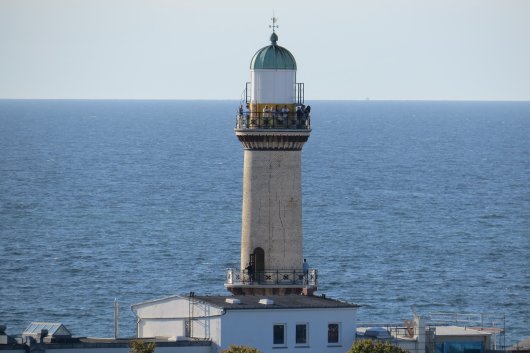
The Warnemunde Lighthouse in Rostock.
Image credit: Pixabay
PAO Novatek and Fluxys have signed a land lease agreement with the Port of Rostock for the construction of a mid-scale LNG storage terminal located at the German port.

The joint venture (Novatek 49 percent - Fluxys 51 percent), named Rostock LNG GmbH, is to design, construct, finance, own and operate the new LNG transshipment facility, which will have an annual capacity of approximately 300,000 tonnes per year.

The LNG terminal is to be used for the unloading and receiving of mid-scale LNG carriers - including LNG vessels from the Cryogas-Vysotsk liquefaction facility that Novatek is currently building at the port of Vysotsk, near St. Petersburg.

Provision is to also be made for LNG bunkering and the loading of bunker vessels at the port.

Following the signing of the land lease agreement, Rostock LNG is to proceed with the engineering and licence approval phase of the project.

"One of our LNG strategic initiatives is to develop small- to medium-tonnage projects to target niche markets and customer segments." noted Leonid Mikhelson, Novatek's Chairman of the Management Board, "This approach allows us to build effective marketing channels on different markets. Moreover, the LNG terminal at Rostock allows us to market LNG as a marine fuel and motor fuel, instead of diesel and fuel oil, that will contribute to decreasing emissions and improving the environment."

Pascal De Buck, managing director of Fluxys, remarked: "Fluxys as gas infrastructure partner is pleased to team up with Novatek in this venture to facilitate the market for liquefied natural gas as low emission fuel in North and Central Europe and in the Baltic Sea area. Gas and gas infrastructure are key to develop a sustainable, reliable and affordable energy system and the Rostock project will allow industry, ship owners and haulage companies to significantly cut emissions impacting health and air quality as well as reducing their carbon footprint."

Earlier this year, Novatek was granted a patent in Russia for its proprietary natural gas liquefaction technology called 'Arctic Cascade'.

The patented LNG technology is based on a two-stage liquefaction process that is said to capitalize on the colder ambient temperature in the Arctic climate to maximize energy efficiency during the liquefaction process, where natural gas is converted to liquid.

Novatek is one of the largest independent natural gas producers in Russia. The company's upstream activities are concentrated in the Yamal-Nenets region, which is the world's largest natural gas-producing area and accounts for approximately 80 percent of Russia's natural gas production and around 16 percent of the world's gas production.

Fluxys is a partner in the world's first purpose-built LNG bunkering vessel, the Engie Zeebrugge, together with Engie, Mitsubishi Corporation and NYK Line.

In Antwerp, meanwhile, Fluxys' dock enables barges and smaller seagoing ships to bunker LNG via tank truck, and by the end of next year the company intends to construct a permanent bunkering facility with LNG storage.

As reported last month, Fluxys sold its share in LNG bunker terminal developer Swedegas to FS Gas Transport AB for SEK 1,024m ($112m).


Zhoushan waterfront at night. Zhoushan becomes world's third-largest bunker port  

Chinese refuelling hub overtakes Antwerp-Bruges and Fujairah to take third place in 2025.

Meyer Turku's net-zero vessel concept render. Meyer Turku completes net-zero cruise ship concept with 90% emissions cut  

Finnish shipbuilder’s AVATAR project vessel design exceeds IMO targets using technologies expected by 2030.

Uni-Fuels Logo. Uni-Fuels renews ISCC certification after first biofuel delivery  

Singapore-based marine fuel supplier completes inaugural ISCC-certified biofuel delivery, supporting EU regulatory compliance.

Close-up of a vessel bow at port. Iberian Peninsula poised to overtake the Netherlands as Europe’s top LNG bunkering hub  

Spanish and Portuguese ports quadrupled ship-to-ship LNG supply in two years, data shows.

FOBAS Fuel Insight Fuel Quality report H2 2025 cover. Lloyd’s Register reports sharp rise in marine fuel quality failures in late 2025  

December recorded the highest monthly off-specification cases, driven by sulphur, catalytic fines and flash point issues.

Bio-LNG bunkering infrastructure. Bahía de Bizkaia Gas launches bio-LNG loading service after ISCC certification  

Spanish regasification terminal begins offering renewable fuel loading for trucks and vessels in January 2026.

Grande Michigan vessel. Grimaldi takes delivery of eighth ammonia-ready car carrier Grande Michigan  

The 9,000-ceu vessel features 50% lower fuel consumption and 5 MWh battery capacity.

Graphic of the ABS logo with a blue background and light effects over a globe. ABS consortium delivers ammonia fuel safety report for EMSA  

Report expands on IMO interim guidelines and highlights need for comprehensive understanding of ammonia properties.

Green Future vessel. NYK operates methanol-fuelled bulk carrier for BHP, claims 65% emissions cut  

Green Future becomes first oceangoing bulk carrier to use low-carbon methanol fuel.

Genesis Sea vessel. Ulstein Verft completes sea trials for Genesis Sea CSOV ahead of spring delivery  

The 89.6-metre vessel features hybrid battery propulsion and preparations for green methanol operation.


↑  Back to Top


 Recommended