This is a legacy page. Please click here to view the latest version.
Mon 18 Dec 2017, 15:51 GMT

World Fuel Services tops Aegean's list of approved debtors


Glencore subsidiaries second on the list with approved limit of $35 million.


Aegean Marine Petroleum has included a list of its approved debtors in its latest filing to the U.S. Securities and Exchange Commission (SEC), submitted on Friday.

In the 401-page document - which outlines the company's recently signed $750 million credit facility, with an accordion option for an additional $250 million - Aegean lists six key organizations as approved debtors, with the top two being bunker sales and brokering specialists.

The companies are: Glencore Group's Chemoil and Oceanconnect, Hapag-Lloyd AG, Mitsui, Qatargas, Wallenius Wilhelmsen Logistics AS / Eukor Car Carriers Inc and World Fuel Services.

According to the document, Aegean has specific credit limits in place with the aforementioned businesses (before application of an advance rate), plus an increment of $10 million, subject to credit insurance, security and other arrangements.

In the case of World Fuel Services, the US-headquartered bunker seller has the largest credit limit of $40 million, plus an increment of $30 million. The approved subsidiaries are: World Fuel Services Europe Ltd; World Fuel Services Trading, DMCC; World Fuel Services (Singapore) Pte Ltd; and World Fuel Services Americas, Inc.

Glencore's affiliates, meanwhile, have a $35 million credit limit as approved debtor. The seven firms listed are: Chemoil International Pte Ltd, Chemoil Middle East DMCC, Chemoil Latin America Inc, Chemoil Corporation, Oceanconnect Marine Pte Ltd, Oceanconnect Marine Inc, and Oceanconnect Marine UK Ltd.

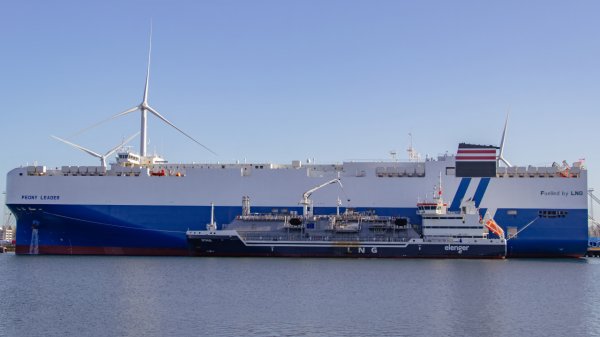
Shipowners Hapag Lloyd, Wallenius Wilhelmsen Logistics AS / Eukor Car Carriers Inc, and Qatargas Group's subsidiaries Qatargas Operating Company Ltd and Qatar Gas Transport Company Ltd each have an approved limit of $30 million.

Finally, Mitsui Group's Mitsui & Co Petroleum Ltd and Mitsui OSK Lines Ltd have a total limit of $25 million.


Zhoushan waterfront at night. Zhoushan becomes world's third-largest bunker port  

Chinese refuelling hub overtakes Antwerp-Bruges and Fujairah to take third place in 2025.

Meyer Turku's net-zero vessel concept render. Meyer Turku completes net-zero cruise ship concept with 90% emissions cut  

Finnish shipbuilder’s AVATAR project vessel design exceeds IMO targets using technologies expected by 2030.

Uni-Fuels Logo. Uni-Fuels renews ISCC certification after first biofuel delivery  

Singapore-based marine fuel supplier completes inaugural ISCC-certified biofuel delivery, supporting EU regulatory compliance.

Close-up of a vessel bow at port. Iberian Peninsula poised to overtake the Netherlands as Europe’s top LNG bunkering hub  

Spanish and Portuguese ports quadrupled ship-to-ship LNG supply in two years, data shows.

FOBAS Fuel Insight Fuel Quality report H2 2025 cover. Lloyd’s Register reports sharp rise in marine fuel quality failures in late 2025  

December recorded the highest monthly off-specification cases, driven by sulphur, catalytic fines and flash point issues.

Bio-LNG bunkering infrastructure. Bahía de Bizkaia Gas launches bio-LNG loading service after ISCC certification  

Spanish regasification terminal begins offering renewable fuel loading for trucks and vessels in January 2026.

Grande Michigan vessel. Grimaldi takes delivery of eighth ammonia-ready car carrier Grande Michigan  

The 9,000-ceu vessel features 50% lower fuel consumption and 5 MWh battery capacity.

Graphic of the ABS logo with a blue background and light effects over a globe. ABS consortium delivers ammonia fuel safety report for EMSA  

Report expands on IMO interim guidelines and highlights need for comprehensive understanding of ammonia properties.

Green Future vessel. NYK operates methanol-fuelled bulk carrier for BHP, claims 65% emissions cut  

Green Future becomes first oceangoing bulk carrier to use low-carbon methanol fuel.

Genesis Sea vessel. Ulstein Verft completes sea trials for Genesis Sea CSOV ahead of spring delivery  

The 89.6-metre vessel features hybrid battery propulsion and preparations for green methanol operation.


↑  Back to Top