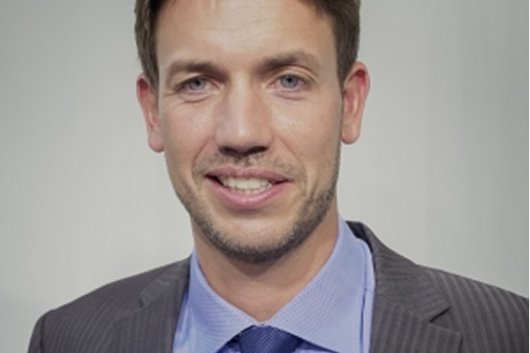
Olivier Jouny, chief executive officer of bunker supplier
Total Marine Fuels Global Solutions (TMFGS), has this week given a clear indication that the supply of LNG to ships is the firm's key priority, describing the emerging market as "
our main focus".
Discussing the company's business strategy, Jouny noted in an intra-company interview this week: "The 15 largest container ships in the world, which run on marine fuel, produce as much sulphur oxide as all the cars on the road worldwide put together. The environmental stakes are very high. That prompted the International Maritime Organization (IMO) to tighten its regulations: it is introducing a 0.5% cap on sulphur content in 2020, versus 3.5% today. And it's likely that in 2025 the allowable limit will be lowered to 0.1%, as is already the case in strict Emission Control Areas (ECA) in Northern Europe, the Baltic Sea and along the coasts of the United States.
By moving to LNG today, we are killing two birds with one stone: complying with the tougher regulations ahead of their introduction and staking out a promising market."
Commenting on the
accord with CMA CGM to supply nine new ultra-large boxships with approximately three million tonnes of LNG over 10 years from 2020, Jouny said: "The agreement serves our ambition for several reasons. To start with, we will be the first company to supply LNG to container ships of this size. Total will be a pioneer in the field, taking advantage of CMA CGM's trailblazing choice to operate its ships on gas. Then, the terms of the agreement offer us better visibility: the agreement is for 10 years, with volumes of 300,000 tonnes a year. Not to mention that Total should also supply the oils and lubricants for all nine vessels, as agreed in principle with CMA CGM. This contract is a great industrial and strategic partnership."
According to Jouny, the one deal with CMA CGM accounts for approximately
75 percent of the emerging LNG bunker market.
"
Total is now a major player," Jouny said, adding: "The market is diversifying and Total intends to be a supplier of both fuels and services. We supply a range of multifuel solutions."
Earlier this year, Total was
named CMA CGM's multifuel supplier in a three-year deal, with Total contracted to supply CMA CGM with fuel oil with a sulphur content of 0.5%; fuel oil with a sulphur content of 3.5% for ships equipped with exhaust gas cleaning systems; and LNG. This week's agreement for the supply of LNG to CMA CGM's nine newbuild containerships extends the business cooperation between both companies further.
Other LNG commitments
Back in July,
Total confirmed that as part of its LNG supply commitment to the
Brittany Ferries vessel
Honfleur at the port of
Ouistreham, it was teaming up with
Dunkerque LNG and
Groupe Charles Andre to develop an innovative supply method that will enable LNG to be delivered via 40-foot (ISO standard) LNG tank containers - mobile storage tanks with a metal frame that are designed for the transport of bulk liquid products.
Also this year, Total
signed a memorandum of understanding (MOU) on LNG bunkering in Singapore with
Pavilion Gas, a wholly owned subsidiary of Pavilion Energy. Pavilion Gas is one of two companies to be awarded an LNG bunker supplier licence by the Maritime Port Authority of Singapore (MPA) - together with Keppel-Shell joint venture company FueLNG Ltd.