Tue 25 Jan 2011, 09:22 GMT

Novorossiysk: Flot NMTP 'monopolistic'


Supplier accused of using its position as sole provider of tugboats to 'persuade' clients to use its bunker service.


Supply sources in the Novorossiysk bunker market were expressing their concern yesterday over a development which was described as 'monopolistic'.

Speaking to Bunker Index yesterday one firm said that bunker supplier JSC Flot NMTP - also known as PJSC Fleet of NCSP - part of Novorossiysk Commercial Sea Port, PJSC (NCSP/NMTP Group), had yesterday used its position as sole owner and provider of tugboats in the Black Sea port in order to effectively 'force' customers to purchase marine fuel from it ahead of its competitors.

The source, who asked not to be named in this article, said Flot NMTP was using its 'monopolistic' position in the Novorossiysk market in order to 'persuade' shipowners to purchase bunker fuel solely from them or they would not be able to make use of its tugboat service.

Bunker Index has been informed that shipping line Zim Integrated Shipping Services Ltd. was a customer on the receiving end of Flot NMTP's 'persuasive tactics' yesterday.

Flot NMTP is the largest private towing and tugboat company in Russia, offering a full range of fleet services at the port, including tug and towing services, bunkering, water and environmental protection services. The company has 46 ships, including tugboats, bunkering vessels, specialized vessels and inshore boats.

The fleet includes 26 tugboats, seven bunkering vessels with a cargo capacity ranging from 250 to 3,000 tonnes, 10 auxiliary vessels (environmental protection, waste collection and passenger ships) and two water carriers.

Prior to January 1st 2011, bunker suppliers in Novorossiysk were able to load their barges either from the IPP Terminal, operated by NCSP Group terminal operator OJSC IPP, or from Sheskharis Oil Terminal, also owned by NCSP Group. However, at the end of last year the loading contracts with bunker suppliers at the IPP terminal were not renewed, which has led to some players loading their product from the port of Temryuk as a result.

One player, Evrasia Bunker Ltd. says it has not been affected by the changes as it is continuing to load product from the Sheskharis Oil Terminal. Prior to November 30th 2010, the company had been supplying ex-pipe to customers at Novorossiysk, but it has since expanded its service to also carry out deliveries by barge.

Another supplier said the recent developments at Novorossiysk are linked to the recent change in ownership of NCSP Group. Transneft, a Russian state-owned business responsible for the national oil pipelines, which transports a large percentage of the oil produced in the country, announced in December that its board of directors had preliminarily approved the acquisition of NCSP, a move aimed at strengthening the company's position in oil transportation.

Omirico, acting in the interests of Transneft, acquired a 100 percent stake in Novoport Ltd., which owned 50.1 percent of NCSP. As part of the deal, NCSP acquired 100 percent ownership of Primorsk Trade Port LLC, an operator at the Port of Primorsk, located northwest of St. Petersburg.

The Primorsk Trade Port acquisition was completed on January 21st 2011. To provide partial financing for the acquisition NCSP attracted a long-term credit facility from Sberbank of Russia in the amount of USD 1.95 billion with a tenure of 7 years.

Representatives of Flot NMTP were not available for comment yesterday.


Christos Doulaveris, Flex Commodities. Flex Commodities appoints Christos Doulaveris as general manager for Greece  

Bunker trader strengthens its Greek operations with a new leadership appointment.

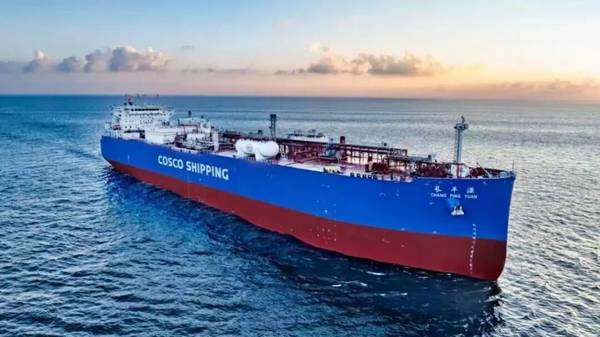
Chang Ping Yuan vessel. China delivers first domestically built VLGC under Chinese flag  

Cosco Shipping’s new 88,000-cbm gas carrier features an LPG dual-fuel main engine.

IMO, GreenVoyage2050 and Republic of Türkiye MoTI logos. Electric and hybrid ferries could cut Sea of Marmara emissions by 63%, IMO study finds  

A GreenVoyage2050 study finds that electrification could slash emissions, avoid €492 million in damage costs and support jobs.

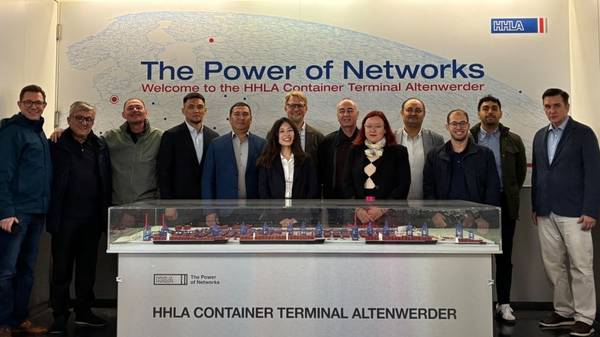
Study visit to Hamburg, Germany, on sustainable port development. Batumi Sea Port officials study decarbonisation practices in Hamburg  

Georgian port representatives visited Hamburg to study emissions accounting, hydrogen technology and automation ahead of their 2026 recertification audit.

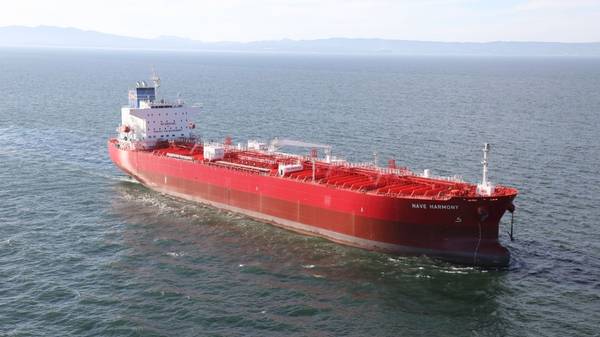
Nave Harmony vessel. Navios Partners takes delivery of methanol-ready MR2 tanker Nave Harmony  

Shipowner adds 49,998-DWT newbuild product tanker equipped with methanol-ready technology.

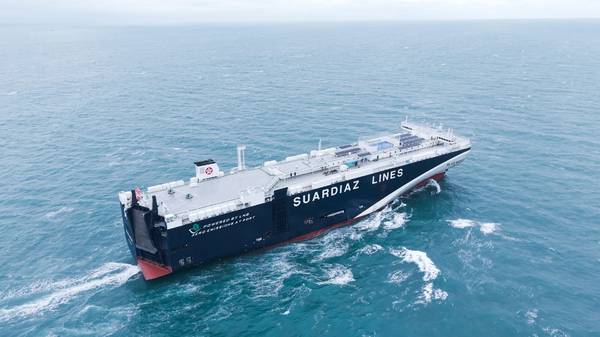
RS Atlantico vessel. Eastern Pacific Shipping delivers LNG dual-fuel PCTC to Suardiaz  

RS Atlantico is the first mid-sized 5,500-CEU car carrier built through the EPS–Suardiaz partnership.

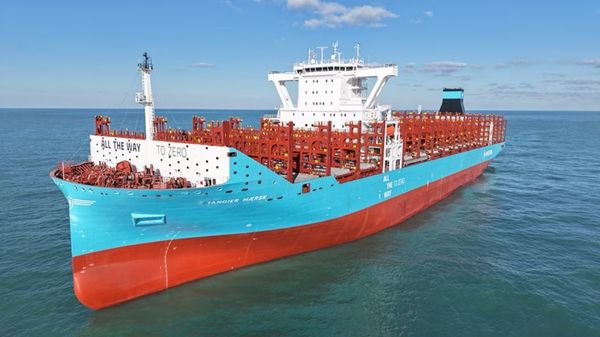
Tangier Maersk vessel. Maersk completes first US ethanol bunkering of a deep-sea container ship  

Shipper tests US-produced corn ethanol as a marine fuel aboard the Tangier Maersk.

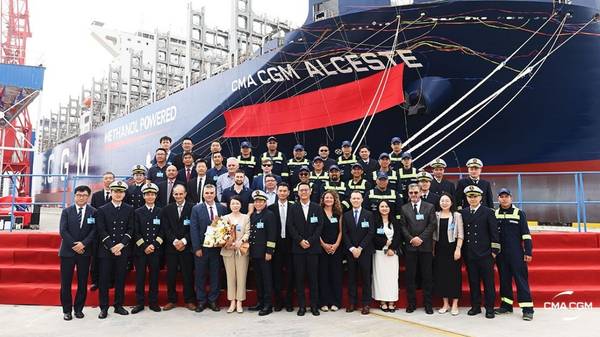
CMA CGM Alceste naming ceremony. CMA CGM names methanol-powered vessel after Molière’s Alceste  

Ship features a MAN B&W 8G85ME two-stroke engine configured to run on conventional marine fuel and methanol.

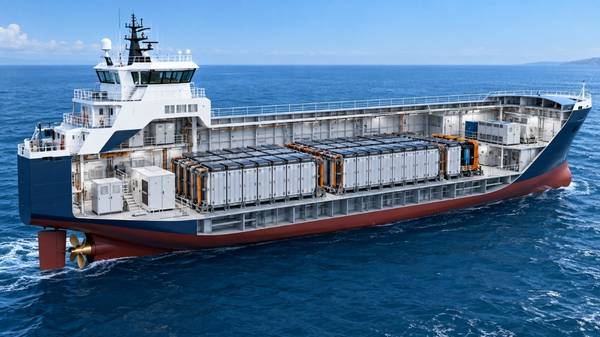
Cutaway illustration of a battery-electric ship. Why batteries still cannot power ships across oceans  

Battery-electric ships dominate short-sea routes, but energy-density and infrastructure constraints keep deep-sea propulsion out of reach.

VPS logo. VPS to run marine fuel management course in Singapore  

Two-day programme in November covers fuel handling, testing and decarbonisation rules, including a laboratory tour.