Tue 1 Dec 2009, 12:57 GMT

Wärtsilä launches new dual-fuel engine


'Fuel flexibility' offered by engine that runs on natural gas, marine diesel oil, heavy fuel oil and biofuels.


Wärtsilä, the marine industry’s leading ship power system integrator, has extended its dual-fuel technology to the lower power range with the launch of the new environmentally advanced Wärtsilä 20DF engine.

The new engine offers ship owners and operators a compact unit that brings all the advantages of fuel flexibility to auxiliary applications, such as generating sets or as the prime mover in smaller vessels.

Commenting on the product, Wärtsilä said "The new Wärtsilä 20DF engine is a testimony to Wärtsilä’s ability to successfully utilize gas as a main fuel for marine operations. This makes gas a practical and attractive option at a time when prices for liquid fuels are uncertain, and when environmental requirements are becoming increasingly stringent."

"The tightening emission regulations under the IMO Tier II & III and ECA zone implementations, and volatile fuel prices mean that ship owners and operators are facing serious challenges. Solutions for complying with new environmental rules while maintaining cost-efficient operations vary, but only one - natural gas - appears to fulfil all the requirements," Wärtsilä added.

The Wärtsilä 20DF completes the dual-fuel range

According to Wärtsilä, the launch of the Wärtsilä 20DF means the benefits of dual-fuel (DF) technology have been extended to cover the entire power range.

Based on the Wärtsilä 20 diesel engine introduced in the early 1990s, fuel flexibility means the engine can be optimized for constant speed generating sets, as well as variable speed mechanical drives, for main engine applications.

Installed alongside Wärtsilä 34DF or 50DF main propulsion machinery, Wärtsilä says the 20DF generating set completes the multi-fuel engine room concept. Compact and light, the Wärtsilä 20DF is intended for use in those vessel types where the Wärtsilä 20 is currently installed.

As well as being an ideal mechanical-drive prime mover in smaller applications, such as small cargo vessels, ferries or tug boats, it is also a choice for harbour generating set applications in a wide range of vessel types.

Main fuel flexibility

Fuel flexibility enables owners and operators to opt for the most suitable fuel, taking into account local environmental restrictions, fuel price variations, and fuel bunkering availability. A unique feature of the Wärtsilä DF dual-fuel engines is their ability to run on Natural Gas, Marine Diesel Oil (MDO), Heavy Fuel Oil (HFO) and Bio Fuels, thereby providing maximum flexibility in fuel choice.

In marine applications, fuel flexibility also represents a significant safety feature. In the case of an interruption to the gas supply, Wärtsilä DF engines automatically switch to diesel operation without any loss in speed or power output. Single-fuel installations do not have this additional level of operational safety.

Keeping emissions under control

When a DF engine is running in gas mode, CO2 emissions are reduced by approximately 20% since natural gas has a lower carbon content than liquid fuels, according to Wärtsilä. The lean-burn combustion process employed means that NOX emissions are reduced by approximately 80%, while SOX emissions are completely eliminated as natural gas does not contain any sulphur. The production of particulates is practically non-existent as natural gas has virtually no residuals.

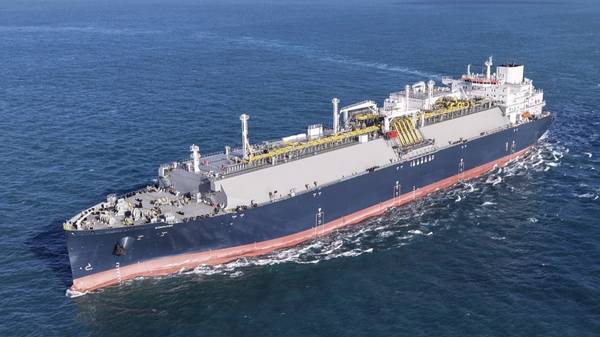
[Pictured: The FLEX LNG Producer. 16 Wärtsilä 50DF dual-fuel engines were ordered in August 2008 to be installed on Floating Production Storage Offloading (FPSO) vessels ordered by FLEX LNG.]


Monjasa Oil & Shipping Trainee (MOST) trainees. Monjasa opens applications for global trainee programme  

Marine fuel supplier seeks candidates for MOST scheme spanning offices from Singapore to New York.

Singapore's first fully electric harbour tug. Singapore's first fully electric tug completes commissioning ahead of April deployment  

PaxOcean and ABB’s 50-tonne bollard-pull vessel represents an early step in harbour craft electrification.

Fuel for thought: Hydrogen report cover. Lloyd's Register report examines hydrogen's potential and challenges for decarbonisation  

Classification society highlights fuel's promise alongside safety, infrastructure, and cost barriers limiting maritime adoption.

Bureau Veritas and Straits Bio-LNG sign MoU. BV Malaysia partners with Straits Bio-LNG on sustainable biomethane certification  

MoU aims to establish ISCC EU-certified biomethane production and liquefaction facility in strategic alliance.

Molgas Energy logo. Molgas becomes non-clearing member at European Energy Exchange  

Spanish energy company joins EEX as it expands European operations and strengthens shipper role.

Yiannis Diamandopoulos, Elinoil. Diamandopoulos appointed CEO of Elinoil as Aligizakis becomes chairman  

Greek marine lube supplier announces leadership changes following board meeting on 5 January.

Sustainable Marine Fuel Services webinar hosted by BV graphic. Bureau Veritas to host webinar on sustainable marine fuel transition challenges  

Classification society to address regulatory compliance, market trends, and investment strategies in February online event.

Inchcape Shipping Services logo. Inchcape to provide bunkering services from new Indonesian offices  

Port agency establishes presence in key bulk and tanker operation hubs handling 150 calls annually.

CPN launch of B100 marine biodiesel supply in Hong Kong graphic. Chimbusco Pan Nation launches B100 biodiesel supply in Hong Kong  

Bunker tanker Guo Si becomes Hong Kong's first Type II certified vessel for pure biodiesel operations.

Vox Apolonia vessel. Van Oord completes Dutch beach replenishment using 100% bio-LNG  

Dredger Vox Apolonia deposited 1 million cbm of sand at Noord-Beveland beach under Coastline Care programme.


 Recommended