The
US Navy's Naval Supply Systems Command Fleet Logistics Center (NAVSUP FLC) last week hosted the
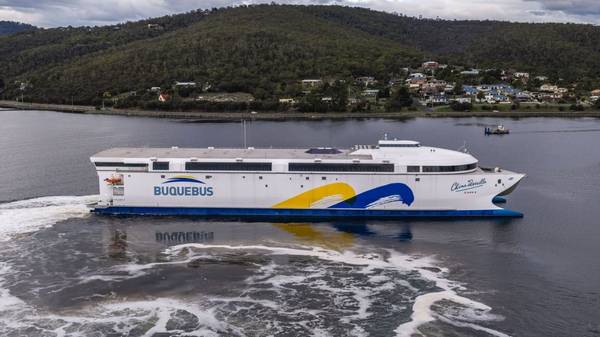
M/V Chimacum,
Washington State Ferries' newest addition to its fleet, for a functional exercise at its
Manchester fuel depot (MFD) on June 19.
The exercise was a '
fit test' to determine if the MFD team could accommodate the Chimacum at the facility's pier and deliver fuel during an emergency.
"This was the first time that NAVSUP FLC Puget Sound tested its ability to rapidly provision Washington State Department of Transportation (WSDOT) vessels," said NAVSUP FLC Puget Sound Regional Fuels Director Liutenant Commander Scott McCarthy. "The evolution analyzed how the Navy would contribute to Defense Support of Civil Authorities (DSCA) requirements in the Pacific Northwest."
If a major earthquake strikes the Pacific Northwest region along the Cascadia Subduction Zone, planners anticipate that much of the land transportation infrastructure such as roads and bridges could be damaged and unusable. One potential solution would be to
use the ferry system and other government and civil maritime assets to conduct aid delivery and life-saving operations to areas that would otherwise be inaccessible.
The June 19 functional exercise was an initial step toward developing a formal agreement between government agencies to provide support during contingency operations should the need arise.
"Manchester Fuel Depot has the potential to be an important resource for WSDOT ferries operating during a prolonged emergency response.
If their normal maritime fuel infrastructure is damaged or unusable, we can step in and provide support to keep the ferries in operation," said Captain
Philippe Grandjean, NAVSUP FLC Puget Sound commanding officer.
MFD, the largest single-site Department of Defense fuel terminal in the continental U. S., has the unique ability to operate without electrical power due to its gravity-operated system. Fuel storage is located on a higher elevation than the delivery point, and the computer-controlled valve system can be operated by hand during a power failure.
No fuel was transferred during the exercise. According to NAVSUP FLC Puget Sound Fuel Department Deputy Director
Glenn Schmitt, the reason for conducting the exercise was to test systems and procedures for docking the ferry and to determine equipment compatibility.
"We also have to consider safety aspects and environmental compliance. There are a lot of moving parts with something like this," said Master Chief Marine Science Technician
Brenda Doris, U. S. Coast Guard Sector Puget Sound, on hand to observe the evolution.
Once the vessel was pier side, the MFD's fuel delivery team walked through a simulation of fueling procedures with the Chimacum's crew.
"Our fuel technicians guided Chimacum alongside, ensuring safe mooring configurations were utilized, and tested hose fittings to simulate fueling while deploying spill containment equipment," said McCarthy.
The idea for the initiative came from an after-action report following the Cascadia Rising 2016 exercise conducted in the region June 7-10, 2016, staged to evaluate the response and coordination of local, state, federal, and tribal government agencies as well as non-governmental and private sector organizations in the aftermath of a major earthquake along the Cascadia Subduction Zone.
According to the Cascadia Rising 2016 Exercise Multi-State After Action Report, one area for improvement calls for exploring alternate modes of transportation in the affected area, including "maritime resources, both public and private, to provide aid and life-saving services to otherwise inaccessible areas." The functional exercise on June 19 was intended to determine the feasibility and ability of MFD to provide fuel and shore support to vessels engaged in disaster response operations.
"This is a great example of interagency coordination between the Navy and the State of Washington, and shows how we can work together for the community's benefit," said Grandjean.
The Chimacum's fit test at the Manchester Fuel Depot was a 'hands on' familiarization, but there is still more to do before a formal plan can be established.
"In the future there will be table-top exercises to look at issues that might arise and consider options for resolution," said Schmitt.
Cascadia Rising 2016 and other emergency preparedness activities revealed the importance of planning and cooperation between multiple agencies to increase effectiveness.
"Washington State Ferries, the Coast Guard and Navy have been exploring ways to work together for some time, and Cascadia Rising highlighted just how important the region's marine assets would be in the event of a major natural disaster. Public and private, military and civilian, all of us in the region's maritime community will be called upon to serve those in need should the 'big one' strike. The exercise on Monday was an important step toward ensuring we're ready to answer that call together," said
Brian Mannion, WSDOT spokesman.
Washington State Ferries operates the largest ferry system in the United States. Twenty-two ferries cross Puget Sound and its inland waterways, carrying more than 22 million passengers to 20 different ports of call.
NAVSUP FLC Puget Sound, one of eight fleet logistics centers under NAVSUP GLS, provides operational logistics, business and support services to Navy, Coast Guard, Military Sealift Command, and other Joint and Allied Forces. Products and services include contracting, fuels, global logistics, hazardous material management, household goods, integrated logistics support, material management, postal, regional transportation and warehousing.
NAVSUP GLS provides logistics for the US Navy worldwide. The organization operates from more than 100 locations worldwide.
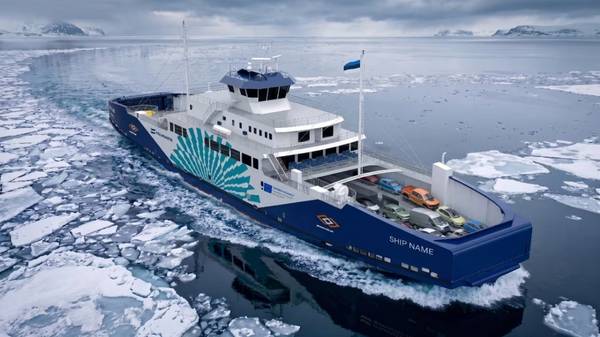
Image: The M/V Chimacum, operated by Washington State Ferries.