Bunker supplier
Neste has been included in the Global 100 list of the world's top 100 most sustainable companies for the 11th consecutive time.
This year, Neste improved its ranking from 39th to 23rd place, and was considered the best-performing company within the oil and gas industry. The company has been included on this list continuously for longer than any other energy company in the world.
"Sustainability is a central component of our strategy and business. We consider our ranking within the Global 100 list as a an important recognition of our company's progress in many areas," noted Neste's
Pekka Tuovinen, Senior Advisor, Sustainability.
Low-sulpur bunker products and biofuel
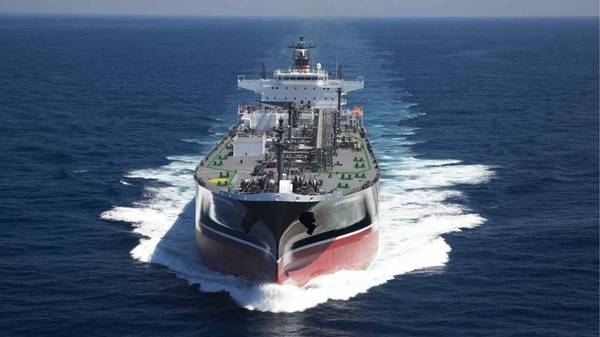
As a bunker supplier in the Emission Control Area (ECA) of the Baltic Sea, North Sea and the English Channel where ships are required to burn fuel with a maximum sulphur content of 0.1 percent, Neste is currently offering two products with sulphur levels below 0.1 percent: a DMA-specification marine diesel oil (MDO) named
Neste MDO DMB, and an RMB-specification bunker fuel called
Neste RMB.
Additionally, the company's recently rebranded
Neste Renewable Diesel technology (previously called NEXBTL Renewable Diesel) enables the production of renewable diesel and other renewable products from nearly any waste fat or vegetable oil through a hydrogen-based treatment.
Neste Renewable Diesel is classified as a hydrotreated vegetable oil (HVO), and, according to Neste, can be blended in any combination with fossil diesel.
In June, Bunker Index reported that Neste had provided the Scripps Institute of Oceanography at the University of California with a supply of NEXBTL Renewable Diesel during
a year-long project that tested biofuel on the research vessel Robert Gordon Sproul.
Recent progress in Neste's sustainability
- Neste says it increased the share of waste and residues to nearly 80 percent of all the renewable raw materials it used in the refining of its renewable products.
- Neste claims its customers were able to reduce their greenhouse gas emissions by 6.4 million tons in 2015.
- Neste says it has explored deforestation risks within its supply chain more widely than before and increased the transparency of its supply chain by publishing a comprehensive list of its palm oil suppliers.
"The sustainability performance of the world's leading companies improve every year. That is why making the list becomes more challenging each year. One-third of the companies on this year's list were different from last year. We will continue our determined work together with our stakeholders to continuously improve the sustainability of our operations and ensure that we will be worthy of similar recognitions in the coming years," Tuovinen added.