Finland's
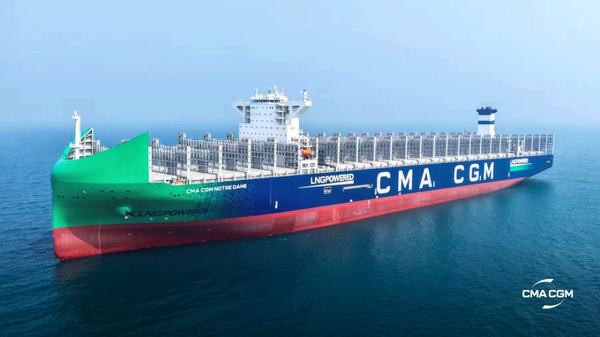
Wärtsilä has received an order for hybrid scrubber systems to clean the exhaust emissions from three 2500-TEU container vessels.
The installation has been ordered by an unnamed major European owner and operator and is to be carried out at the Jinhai Heavy Industry Co., Ltd in China. The contract was signed in March 2015 and the systems are scheduled for delivery in December 2015.
The scrubber system, which comprises two scrubber units, will be installed to clean the exhaust from both the main and auxiliary engines. This arrangement is designed to enable flexibility and cost savings when operating at different operational settings. In all, 28 megawatts (MW) of total power output will be handled by the Wärtsilä system. The system is designed to clean the sulphur oxide (SOx) and particulates from the exhaust gas.
The design incorporates a cleaning system for the scrubbing wash water. This is to ensure that the eventual discharge water is well within the regulatory limits. Wärtsilä says that "special care" has also been given in the design to allow the systems to operate for extended periods with zero discharge of the effluent scrubbing water. This is described by the Finnish firm as being "an important advantage" when the vessels are operating in environmentally sensitive waters.
Sigurd Jenssen, Director, Exhaust Gas Cleaning, Wärtsilä Ship Power, commented: "The ships will be operating at times in harsh climatic conditions and Wärtsilä has considerable experience in developing scrubber systems technology for use in challenging marine environments. The system is optimised to give the necessary flexibility in relation to the ships' operations, with special emphasis given to minimising the operational costs."
Wärtsilä says it will provide engineering and consulting support during the installation, while the company's global service network is to ensure ongoing technical support throughout the lifecycle of the vessels.
Wärtsilä Hybrid Scrubber Systems enable the use of either closed or open loop technology to remove SOx from the exhaust. When operating in open loop mode, exhaust gases enter the system and are sprayed with seawater. Chemicals are not required since the natural alkalinity of seawater reacts with the sulphur and cleanses it from the exhaust gas. When operating in closed loop mode, sodium hydroxide (NaOH) is added to the seawater as an alkali.
The hybrid approach enables operation in closed loop mode when required, for instance when entering zero discharge areas or where the seawater alkalinity is low, and elsewhere the switch can be made to open loop using only seawater.