Wed 25 Aug 2010, 17:28 GMT

DNV launches sustainability division


New division aims to steer DNV towards green service growth and sustainability services.


Det Norske Veritas (DNV) has announced that it has formed a new division called DNV Sustainability and Innovation. The new division has been set up to steer DNV towards green service growth and sustainability services.

“Our decision to establish the new division shows our strong commitment in the area of sustainability,” said Dr Henrik O. Madsen, chief executive officer at DNV. “We are continuously striving to show that in an increasingly challenging world, DNV’s competence and expertise instils trust and confidence and that we can help companies achieve sustainable economic, safe and environmental performance.”

Madsen added: “DNV has a proven ability to provide independent support to organisations operating in risk sensitive and specialised environments such as maritime, oil and gas. With the new division, we aim to extend our ability by further developing our climate change and sustainability services for industries and sectors where DNV is not yet seen as a global player.”

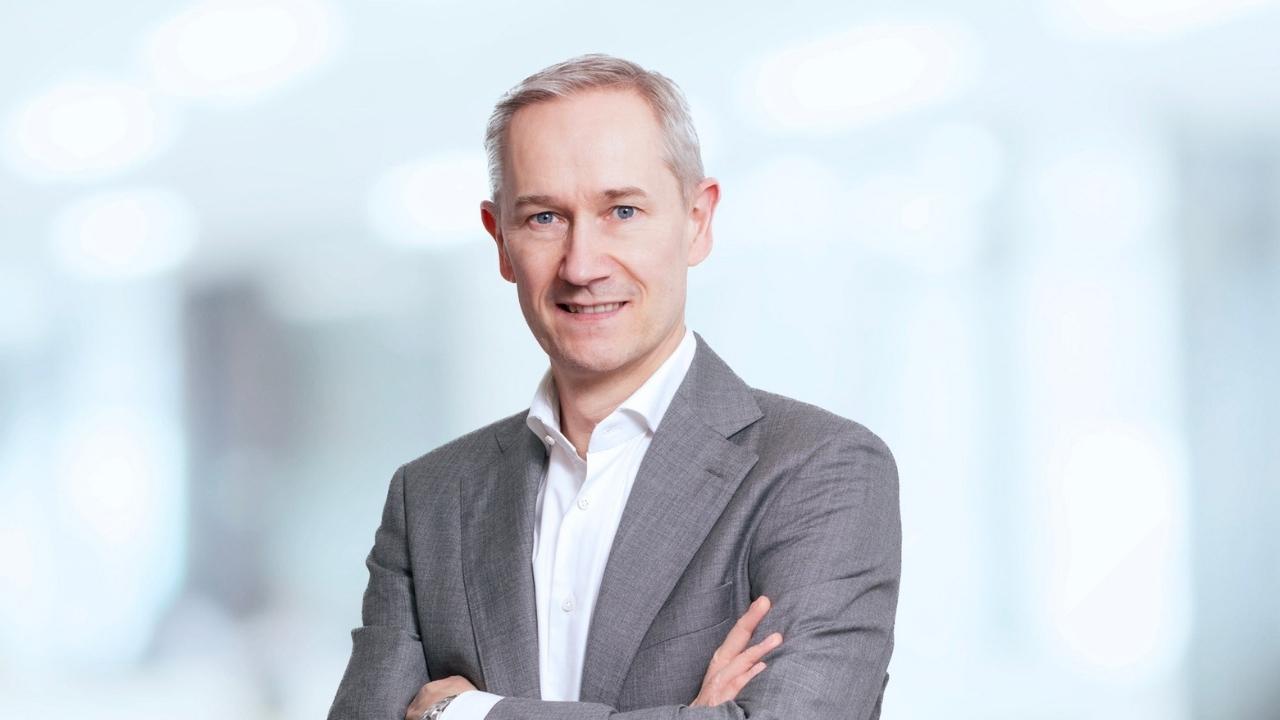
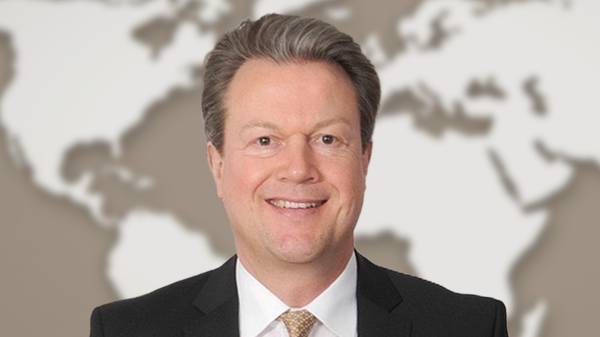
The new division currently employs over 400 technical and operations specialists and experts working around the globe. Chief operating officer for the new division Bjorn K. Haugland [pictured] expects the division to expand significantly over the next few years in response to changing markets and customer needs.

Global focus

“Division Sustainability & Innovation has a global mandate, currently operating out of 17 countries. Our aim is to build on our reputation as a trusted services provider enabling business and society to manage the new risk reality,” said Haugland.

“We aim to be innovative, business-oriented and build up new service platforms within the sustainability domain,” he explained. “We have high growth ambitions and expect to achieve 1.3bill NOK in revenues by 2014. To achieve this, we will expand our climate change, healthcare & biorisk services, and our risk management & corporate responsibility services. We will also leverage on the rising global demand for innovation by further developing DNV’s strategic research unit and the DNV Sustainability Centre in China.”

Recognising the need for collaborative business models, DNV works closely with industry groups, public authorities, universities, the EU Commission and sustainability organisations such as the World Business Council for Sustainable Development and the UN Global Compact.

“We firmly believe that our collaborative model is the best way forward to address the most pressing challenges facing global society. The slowdown in the world economy, uncertainty about how to meet an increasing demand for energy, and the urgency of dealing with changes in our climate. These are all issues that call for our combined ability to find new and sustainable solutions,” Haugland commented.

Referring to a recent study, Haugland said seventy percent of firms with revenue of $1 billion or more say they plan to increase spending on climate change initiatives over the next two years. “Despite regulatory uncertainty companies are taking action because it makes business sense. A business’s long-term competitiveness will increasingly depend on how it embraces societal challenges."

Haugland added: “As an independent foundation with a strong technology base and risk management as our core area of expertise, we fill a unique role in creating trust and confidence among stakeholders worldwide. We have over the past 13 years developed a range of climate change-related services that assist companies, organisations and governments in their efforts to fight, mitigate and adapt to this critical, global issue. We have established an industry position in this field, and believe that our services will become even more important in the future as companies push to become climate neutral or even aim to be climate positive."


Repsol industrial complex in Puertollano. Repsol starts large-scale renewable fuel production at second Iberian plant  

Spanish energy company's Puertollano facility adds 200,000 tonnes per year of renewable diesel capacity.

SD Aisemaht vessel. World's first dual-fuel methanol escort tug receives full class certification  

ABS grants certification to SD Aisemaht, built by Sanmar Shipyards for Canada's Trans Mountain Expansion Project.

CMB.Tech and TFG Marine signing. CMB.Tech raises TFG Marine stake to 15% and consolidates bunker procurement through joint venture  

CMB.Tech increases its equity stake in TFG Marine and commits its entire fleet’s bunker requirements to the joint venture.

XFuel demo plant in Mallorca, Spain. XFuel secures EUR 4.1m Catalonia grant for waste-derived marine fuel plant  

Spanish start-up wins funding to build a modular facility converting waste oils into low-carbon marine gas oil.

Liquefied biogas facility at Port of Gothenburg render. Construction begins on liquefied biogas facility at Port of Gothenburg  

Nordion Energi's new plant aims to open up Swedish biogas supply to shipping and other sectors beyond the gas grid.

Sun Princess ship-to-ship (STS) LNG bunkering operation. Axpo completes first LNG bunkering of cruise ship at port of Naples  

Sun Princess bunkered at Naples, marking the first LNG operation on a cruise vessel at the Italian port.

Ship-to-ship (STS) HVO supply at Keihin Port. Kamei Corporation begins Japan’s first ship-to-ship HVO supply at Keihin Port  

Japanese energy company launches HVO bunkering operation using drop-in biodiesel fuel brand Susteo.

Uni-Fuels Logo. Uni-Fuels posts $376k net loss in Q1 2026 despite 64% revenue jump  

Singapore-based bunker firm attributes loss to communication expenses incurred during the period.

Participants of SSA training course. SSA launches green fuels training course ahead of low-carbon transition  

The Singapore Shipping Association has introduced a course covering alternative marine fuels and emissions frameworks.

The Nautical Institute (NI) logo. The Nautical Institute launches bunkering and engineering assessors course  

New programme targets behavioural competency and human factors in high-risk shipboard operations.