Wed 5 Oct 2016, 10:37 GMT

Shenzhen 0.5% sulphur cap now effective


Ships calling at Shenzhen are now required to use fuel with a sulphur content not exceeding 0.5 percent when at berth.


As previously announced by Bunker Index, as of 1st October, ships calling at Shenzhen are now required to use marine fuel with a sulphur content not exceeding 0.5 percent when at berth.

The development follows the implementation, on 1st April 2016, of a similar 0.5 percent sulphur regulation for ships berthing (at anchor or alongside) at key ports of the Yangtze River Delta Emission Control Area (ECA), namely Shanghai, Ningbo, Zhoushan, Nantong, Suzhou, Zhanjiagang , Changshu and Taicang.

Last month, local authorities at the Zhujiang (Pearl River) Delta port of Shenzhen, issued a circular concerning the upcoming implementation of the new limit on the sulphur content of marine fuel.

In the document, entitled 'Circular on the use of low sulfur oil by vessels when berthing at Shenzhen Port', the Human Settlements and Environment Commission of Shenzhen Municipality, the Maritime Safety Administration (MSA) of Shenzhen Municipality and the Transport Commission of Shenzhen Municipality formally confirmed that "it is decided to require compulsorily vessels to use low sulfur oil when berthing at Shenzhen port".

There is an allowance of one hour after arrival and one hour prior to departure for fuel oil changeovers to take place. Also, military vessels, fishing boats and sports watercrafts are excluded from the requirement.

On the issue of documentation, the local authorities said last month: "Vessels shall, as required, keep fuel documents such as the Fuel switch record, fuel supplying and receiving document, oil record book and engine logbook, for inspection by relevant departments and institutions."

Operators were warned that Shenzhen MSA would "strengthen the supervision of arriving vessels, enhance the random inspection on the quality of fuel and the discharge from vessels". Any vessels using low-sulphur fuel that did meet the new standards would be "punished" in accordance with Article 106 of the 'Law of the People's Republic of China on the Prevention and Control of Atmospheric Pollution', the local authorities stressed.

On the issue of using equivalent measures to reduce the emissions of a ship, Shenzhen authorities explained that, except when using shore power or liquefied natural gas (LNG), prior permission will need to be obtained from the Shenzhen Maritime Safety Administration and the Human Settlements and Environment Commission of Shenzhen Municipality.

Immunity and exemptions

The MSA has outlined the specific circumstances under which immunity or exemption may be granted.

Immunity

Vessels can request immunity in advance if they do not fulfil all the requirements of the circular. A request will need to be put forward to the MSA and materials submitted.

After verification by the MSA, a vessel can be granted immunity if:

1. The vessel operator can provide evidence to show that it has exercised due diligence, but still failed to obtain low sulphur fuel.

2. The vessel operator is able to prove that the vessel will be modified to use low-sulphur fuel and that the modifications will be completed before 1st January 2017.

3. The vessel operator can prove that using low sulphur oil during berthing will cause danger to the safety of the vessel.

Exemptions

If the vessel operator can provide sufficient evidence to show that low-sulphur fuel was not used due to a force majeure or another emergency situation. Under such circumstances, the vessel will need to put forward its request immediately to the MSA (via VHF or telephone etc) and submit written documentation afterwards.


Global Ethanol Association (GEA) and Vale logo side by side. Vale joins Global Ethanol Association as founding member  

Brazilian mining company becomes founding member of association focused on ethanol use in maritime sector.

KPI OceanConnect Logo. KPI OceanConnect seeks marine fuel trading intern in Singapore  

Bunker supplier advertises role offering exposure to commercial and operational aspects of marine fuel business.

Frank Dahan, CSL Group. CSL Group's Frank Dahan appointed chair of IBIA's Americas regional board  

Dahan brings 29 years of marine transportation and energy experience to the role.

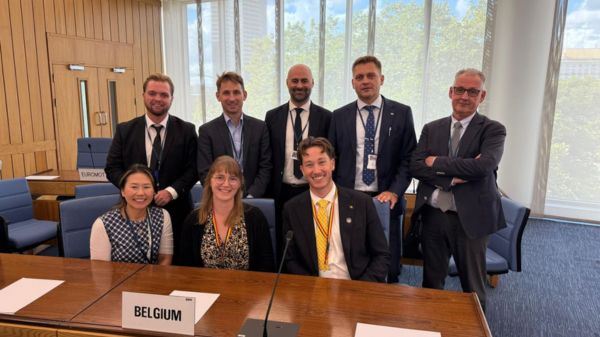
IMO Member States, Belgium delegation. Lloyd's Register, EXMAR, and Belgium’s Federal Public Service develop interim guidelines for ammonia cargo as fuel  

Guidelines expected to receive formal IMO approval in May 2026, enabling ammonia use on gas carriers.

Knut Ørbeck-Nilssen, DNV. DNV to lead Nordic roadmap Phase 2 for zero-carbon shipping transition  

Programme will identify green corridors and tackle cost barriers through new financing approaches.

Monjasa logo. Monjasa seeks trader for Dubai operations  

Marine fuel supplier recruiting for trading role covering sales, purchasing, and logistics in UAE.

IBIA Board Elections 2026 – Call for Nominations announcement. IBIA calls for board election nominations ahead of Friday deadline  

Association seeks candidates for 2026 board positions with submissions closing 12 December.

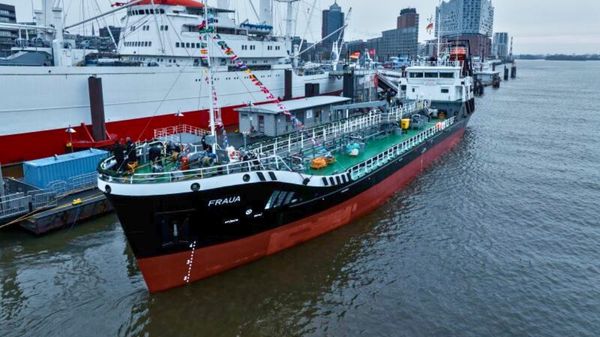
Fraua vessel. BMT Bunker adds tanker MT Fraua to fleet  

BMT Bunker und Mineralöltransport has expanded its fleet with a new vessel.

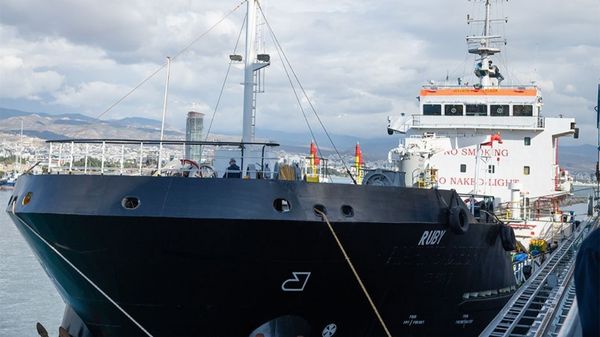
Ruby bunkering vessel. Island Oil expands Cyprus bunkering fleet with vessel Ruby  

Island Oil adds second bunkering vessel to strengthen marine fuel supply operations in Cyprus.

Wärtsilä and Aalto University partnership signing. Wärtsilä and Aalto University extend R&D partnership to accelerate marine decarbonisation  

Five-year agreement expands international collaboration on alternative fuels and clean energy technologies.