
 |
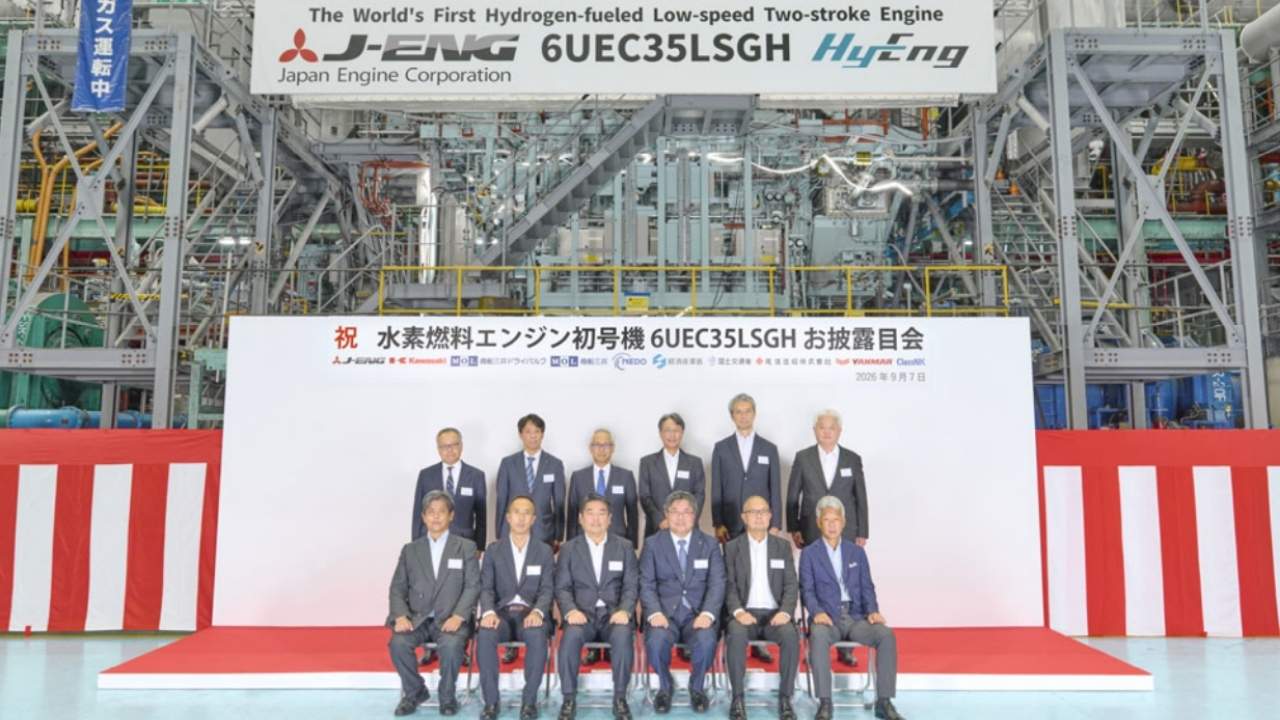
Japan Engine Corporation has announced the completion of land-based testing of what the company describes as the world’s first hydrogen-fuelled engine for large commercial vessels.
The 6UEC35LSGH engine was unveiled to project stakeholders at Japan Engine’s headquarters factory on 7 September. During factory testing, it achieved a hydrogen co-firing rate of at least 95%, which the company says reduced GHG emissions by more than 95% compared with conventional heavy-fuel-oil engines.
The engine — which uses a high-pressure direct-injection system, injecting fuel directly into the cylinder to achieve stable hydrogen combustion — forms part of the 'Development of Marine Hydrogen Engines and MHFS' project, developed jointly by Japan Engine, Kawasaki Heavy Industries and Yanmar Power Solutions Co., Ltd. under the New Energy and Industrial Technology Development Organization's (NEDO) Green Innovation Fund Project.
The company said safety measures have also been incorporated, including a structure intended to prevent hydrogen leakage and double-walled piping for hydrogen supply lines. Approval testing was conducted in the presence of Nippon Kaiji Kyokai (ClassNK).
Installation and onboard demonstration
The landmark engine is scheduled to be installed in January 2027 on a 17,500-DWT multipurpose vessel being built by Onomichi Dockyard Co., Ltd. for Mitsui O.S.K. Lines, Ltd. and MOL Drybulk Ltd. Hydrogen fuel will be supplied to the engine through a Marine Hydrogen Fuel System (MHFS), consisting of marine hydrogen fuel tanks and a fuel supply system developed and manufactured by Kawasaki.
Kawasaki will also develop and manufacture bunkering equipment for the supply of liquefied hydrogen to vessels.
Following installation, the vessel will undergo sea trials before onboard demonstration testing begins in April 2028. The demonstration is intended to evaluate the engine’s durability and performance under operating conditions, according to the project partners.
ClassNK will conduct safety assessments throughout each stage of the engine’s development and the vessel’s design, construction and operation, the announcement said.
The hydrogen engine has been developed as part of the 'Blue Harmony' project, which aims to develop and commercialise hydrogen-fuelled vessels.
Japan Engine noted that this latest development follows its completion in August 2025 of the world’s first ammonia-fuelled marine low-speed two-stroke engine, positioning the firm among the key manufacturers developing engines powered by alternative fuels.
|
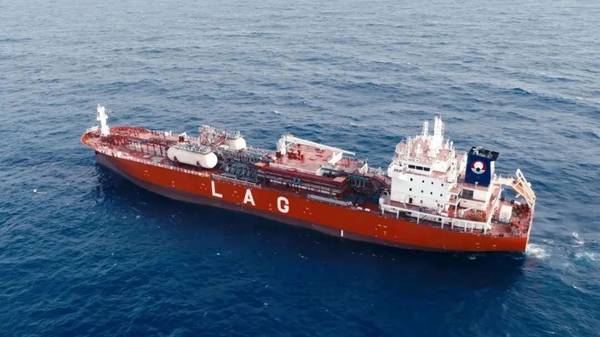
China delivers first domestically built ammonia-fuelled gas carrier
CCS-classed vessel becomes the world's second ammonia-fuelled gas carrier, testing rules for the IMO's zero-carbon shipping transition. |
|
|
|
||
|
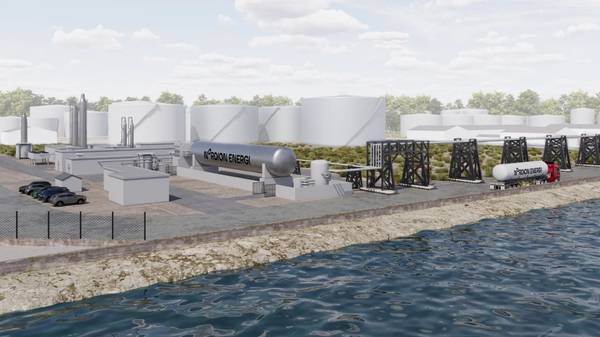
Storage tank installed as Gothenburg's LBG bunkering plant advances towards 2027 completion
Nordion Energi's liquefied biogas facility at the Port of Gothenburg takes a step forward with tank installation. |
|
|
|
||
|
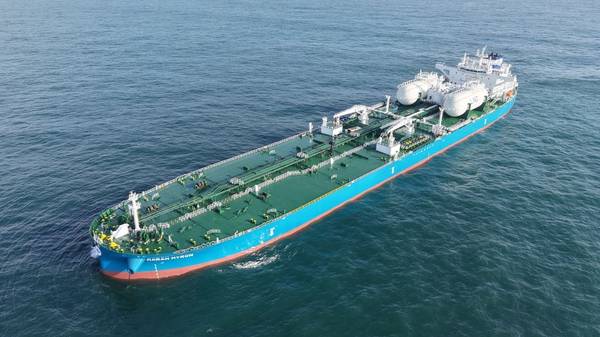
Maran Tankers takes delivery of dual-fuel Suezmax Maran Myron
Vessel is sixth dual-fuel tanker in eight-vessel series built by New Times Shipbuilding. |
|
|
|
||
|
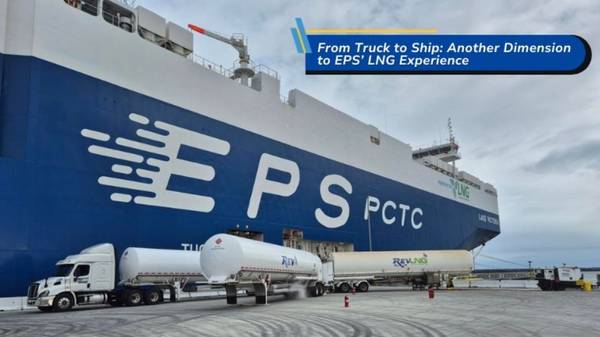
EPS completes first truck-to-ship LNG bunkering operation in Davisville
Fuel delivered to the pure car and truck carrier Lake Victoria whilst at berth. |
|
|
|
||
|
MPA opens applications for LNG floating storage unit licences
Singapore invites applications for up to two LNG floating storage unit licences to bolster bunkering supply resilience. |
|
|
|
||
|
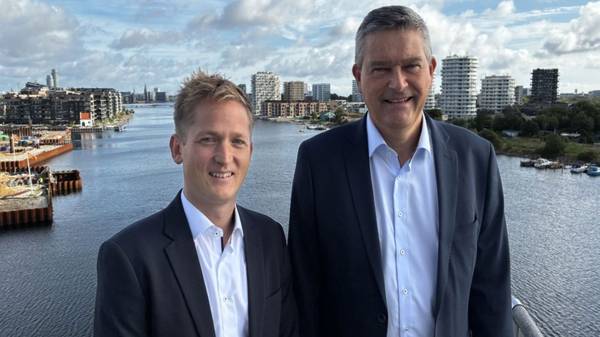
Everllence's small-bore GenSet orders surpass 2,000 in 2026
Engine maker reports strong order intake across its small-bore portfolio, citing demand for reliable, fuel-flexible auxiliary power. |
|
|
|
||
|
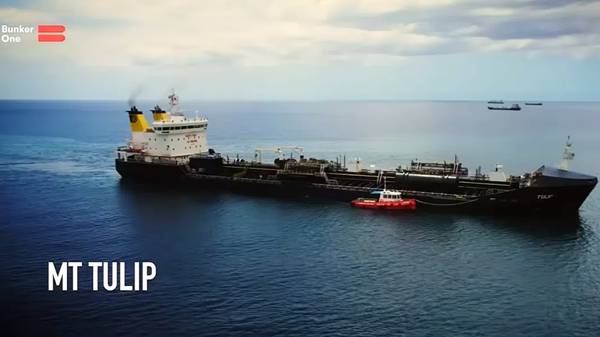
Bunker One renews MT Tulip charter, plans mass flow meter upgrade in Mauritius
Bunker One is keeping its bunker tanker in Mauritius while adding flow metering technology to improve delivery transparency. |
|
|
|
||

|
Fund for Energy Efficiency Technologies becomes first to adopt revised Singapore-Asia Taxonomy
FEET's adoption coincides with Lloyd's Register's independent review of GCMD's methodology for quantifying fuel savings from wind-assisted propulsion systems. |
|
|
|
||
|
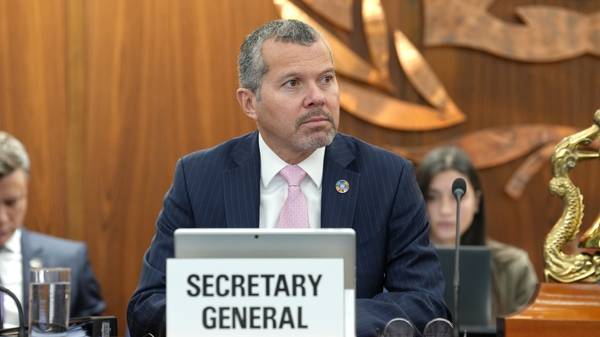
IMO chief urges states to enforce safety rules in Strait of Hormuz amid rising attacks
Arsenio Dominguez says more than 130 attacks on commercial vessels have been verified since February, with at least 25 seafarers killed. |
|
|
|
||
|
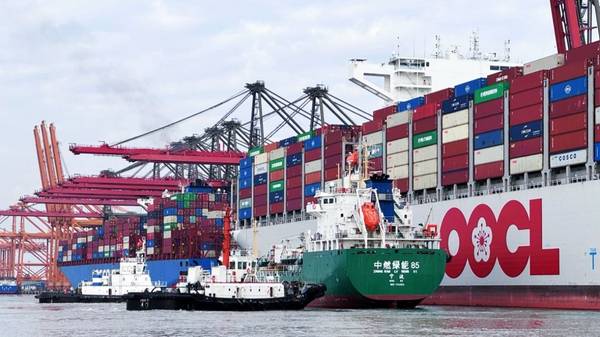
Xiamen Port launches 'green methanol bunkering' with OOCL Wisdom
Boxship received 1,005 tonnes of methanol, corresponding to a reduction of more than 1,600 tonnes in carbon emissions, says COSCO Shipping. |
|
|
|
||
| China delivers first domestically built ammonia-fuelled gas carrier [News & Insights] |
| Maran Tankers takes delivery of dual-fuel Suezmax Maran Myron [News & Insights] |
| Everllence's small-bore GenSet orders surpass 2,000 in 2026 [News & Insights] |
| Xiamen Port launches 'green methanol bunkering' with OOCL Wisdom [News & Insights] |
| Peninsula marks three years of LNG bunkering with Levante LNG [News & Insights] |
