
 |
Geopolitical instability has emerged as the defining risk facing the global shipping industry, acting as a multiplier across a range of operational and strategic challenges, according to the International Chamber of Shipping (ICS) Maritime Barometer Report 2025–2026, launched on 23 June at the organisation’s Shaping the Future of Shipping Summit in Rome.
The report, which surveys C-suite executives, shipowners and operators worldwide, recorded a record number of responses in its latest edition. It identifies geopolitical instability as the sector’s most pressing concern and finds that this instability compounds challenges including cybersecurity threats, regulatory fragmentation, administrative burden and shifting global trade patterns.
ICS Secretary General Thomas Kazakos commented: “Global shipping is entering a period where uncertainty is no longer an interruption to business, it is the backdrop against which decisions are made. The findings of this year’s Barometer are clear: geopolitical instability has become a defining risk multiplier, influencing everything from market conditions and operational planning to investment decisions and the pace of the energy transition. In response, industry leaders are taking an increasingly pragmatic approach, prioritising resilience, adaptability and proven solutions.”
Fuels outlook shaped by uncertainty
The Barometer’s dedicated fuels section points to a cautious, infrastructure-led approach to decarbonisation. Respondents identified LNG and biofuels as the most viable fuel options for the coming decade, followed closely by heavy fuel oil (HFO) combined with abatement technologies. It suggests there is a preference for solutions underpinned by established supply chains and infrastructure, rather than emerging alternatives that face challenges related to cost and availability.
The findings indicate that, without greater regulatory certainty, the industry’s energy transition is likely to follow a more measured trajectory. Industry leaders are said to be calling for greater coordination between governments and the shipping sector, as well as clearer regulatory frameworks and financial support mechanisms to facilitate decarbonisation.
Kazakos stated: “Maintaining progress will require regulatory clarity, global alignment, and continued cooperation between industry and governments. The report reinforces the importance of stable international frameworks that support investment and provide confidence for long-term decision-making. At a time of increasing fragmentation, maintaining a consistent global approach is essential for shipping, supply chains, and the wider world economy.”
Resilience amid fragmentation
Despite the challenging environment outlined in the report, ICS notes that the findings also point to the sector’s capacity to adapt. The barometer underscores calls from shipping leaders for a more coordinated international regulatory approach, with the report warning that increasing fragmentation poses risks not only to the shipping industry but to global trade more broadly.
ICS represents merchant shipowners and operators across all sectors and trades, and claims to represent over 80% of the world’s merchant fleet.
|
IBIA to host ethanol marine fuel workshop in New York
Limited-capacity session will examine ethanol’s commercial, technical and regulatory prospects as a shipping fuel. |
|
|
|
||

|
Corvus Energy’s Blue Whale NxtGen battery system gains DNV type approval
DNV approval confirms the safety and performance of Corvus Energy’s large-scale battery system for ferries, cruise ships and offshore vessels. |
|
|
|
||

|
PMG Energies appoints Jessie Ng as bunker trader in Singapore
Bunker firm adds experienced trader to Singapore team. |
|
|
|
||
|
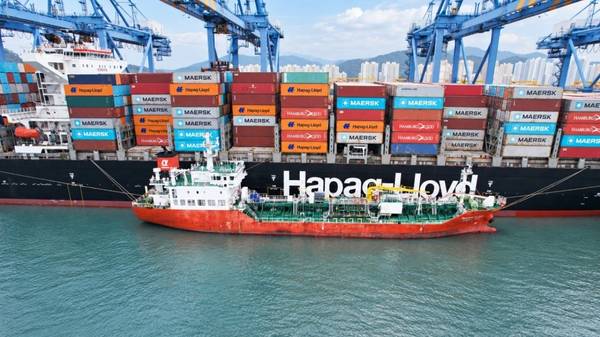
Hapag-Lloyd completes simultaneous-operations biomethanol bunkering in Busan
Container line bunkers ISCC EU-certified biomethanol from Goldwind during SIMOPS, advancing its 2024 supply agreement. |
|
|
|
||
|
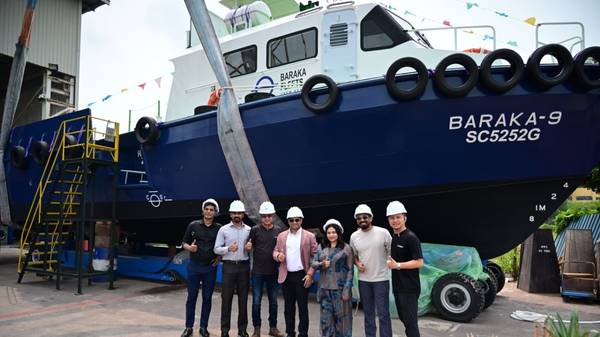
Pinnacle Marine launches B100-compatible harbour craft Baraka-9 for Trans Wave
Singapore shipbuilder adds another biodiesel-ready vessel to a fleet renewal programme aimed at harbour craft decarbonisation. |
|
|
|
||
|
Glander International Bunkering creates European commercial director role, appoints Rune Kongstein
Marine fuels firm is aligning its European operations under a single commercial leadership structure. |
|
|
|
||
|
VPS to run marine fuel management course in the Netherlands this November
Two-day training programme covers fuel quality, handling and decarbonisation regulations. |
|
|
|
||
|
Wind-assisted propulsion 'no longer just a concept', ICS panel says
Shipowners weigh wind power as a practical, low-risk route towards decarbonisation targets. |
|
|
|
||
|
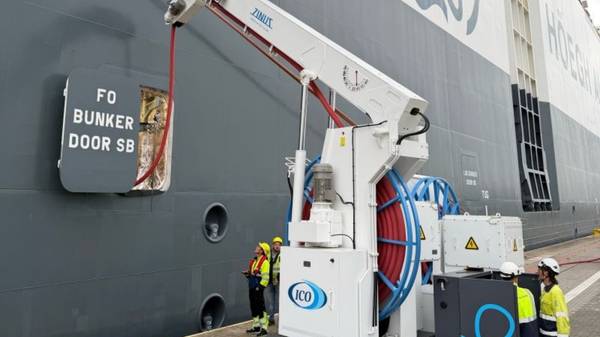
Höegh Autoliners vessel connects to shore power for the first time in Europe
Höegh Starlight used 11 kV shore power in Zeebrugge, allowing it to switch off its auxiliary engines while alongside. |
|
|
|
||
|
Chinese shipbuilder ROC signs deal for up to eight methanol-ready CSOVs
Contract signed with European shipowner for vessels designed for offshore wind farm maintenance work. |
|
|
|
||
| Wind-assisted propulsion 'no longer just a concept', ICS panel says [News & Insights] |
| Nuclear-powered LNG carriers cost more upfront but cut lifetime fuel bills, ABS-backed study finds [News & Insights] |
| Electric and hybrid ferries could cut Sea of Marmara emissions by 63%, IMO study finds [News & Insights] |
| Electric and hybrid ferries could cut Sea of Marmara emissions by 63%, IMO study finds [News & Insights] |
| Batumi Sea Port officials study decarbonisation practices in Hamburg [News & Insights] |
