Fri 29 Apr 2016, 08:51 GMT

Marine segment results discussed in World Fuel Services earnings call


Management team discuss the company's performance in the first quarter.


The marine segment of World Fuel Services (WFS) sold 7.7 million metric tonnes during the first quarter of 2016, up slightly on last year, chief financial officer (CFO) Ira Birns [pictured] confirmed during the company's first-quarter earnings call on April 28.

Brokered business activity for the quarter was approximately 13 percent of total marine volumes, as compared to 14 percent in the first quarter of 2015, Birns said.

Explaining the reason for the 27 percent decrease in marine segment gross profit (from $39 million to $15 million), Birns remarked: "The significant year-over-year variance was principally driven by the large spike in volatility and higher demand for price risk management products in the first quarter of last year, which contributed to an extremely strong quarter. A year later, considerably lower prices have weakened the offshore market and impacted unit margins, and so much in the second quarter of last year, lower volatility and fuel prices has significantly decreased the demand for price risk management products. While fuel prices and volatility have recently increased somewhat, we have only seen modest improvement in our core resale business, and we're yet to see any meaningful uptick in demand for price risk management products so far this quarter."

Commenting on the marine segment results, CEO Michael Kasbar said: "While our year-over-year first quarter volumes remain flat, a continued period of low fuel prices and depressed shipping freight rates have put downward pressure on profitability. In addition, the prevailing industry sentiment that fuel prices were unlikely to rise in the foreseeable future muted the demand for our price risk management products.

"Looking ahead, dry bulk and container forecasts remain weak as companies continue to operate below break-even levels, while shipyards remain full and asset values remain low. The outlook for tanker companies is somewhat positive, benefiting from a strong outlook for oil demand, but the market still remains cautious. Notwithstanding these challenges, our commitment to the marine market, which transports about 90 percent of the world's goods, remain strong.

"We believe a constrained credit environment and stricter bank lending criteria will open up opportunities for World Fuel to utilize its strong balance sheet and supply chain excellence to support our customers and suppliers through this prolonged downturn. Furthermore, we believe there is enduring demand in the marine fuels market for a financially strong, transparent, trustworthy, reliable, and innovative global counterparty."

Fielding a question on competition in the marine fuels market, Kasbar explained: "The marine market is a pretty interesting place. The barrier to entry is quite low. So you've got lots of folks that are in the market, and the entry now is pretty low, credit is readily available. So you've got a lot of people chasing business. And that is absolutely a factor. We believe that long-term, as I said earlier, the market is consolidating, large companies want to know who they're dealing business with. They are looking for comprehensive solutions and services. That's what we're oriented to, not that we don't do business with small companies, we do business with a lot of small companies, but that is a factor within the market today.

"So that's certainly a challenge within the marine business. We deal with that, and being the low cost provider in almost everything we do, we certainly are objective, and leveraging technology, working our business model, so that we have the right fixed cost for the type of net revenue that we have is certainly something that we have to adjust from time-to-time, but it's an issue. I mean, there's counterparty risk all over the place. The market forgets pretty quickly. It's really quite an extraordinary thing. You'd have thought with today's technology and the amount of information distribution that people would know better, but there're still a lot of small players that are undercapitalized, and the counterparty risk is not insignificant. And those companies do go by the board the minute that there is an issue. And that is a significant amount of risk within the marketplace today. So that's a factor, and that definitely has some impact on our ability to do business on the fringes."


ClearMariner homepage. ClearMariner expands maritime sanctions screening with ESG, emissions and API support  

Online service now combines sanctions checks with voyage CO₂, CII, EU ETS and FuelEU Maritime estimates.

Long Jing Xin, Flex Commodities. Flex Commodities adds Long Jing Xin to Singapore marine fuels team  

Company appoints associate for marine fuels as part of plan for regional expansion.

CMA CGM logo. CMA CGM recruiting risk manager to oversee oil, gas and CO₂ exposure in energy and bunkering unit  

Container line seeks senior hire for hedging, stress testing and fuel purchasing performance oversight.

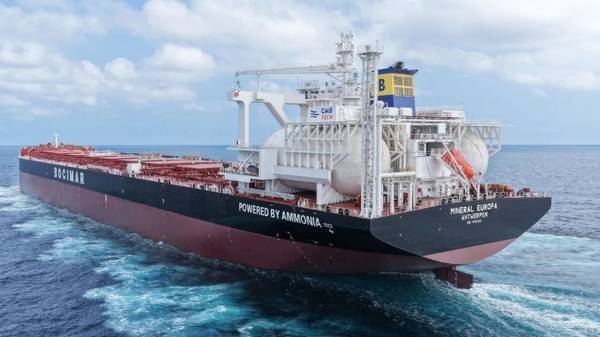
Mineral Europa vessel. CMB.Tech's Mineral Europa starts maiden voyage as first ammonia-powered dry bulk vessel  

Ship is bound for Australia, with 21 ammonia-powered vessels due to join its fleet by 2029.

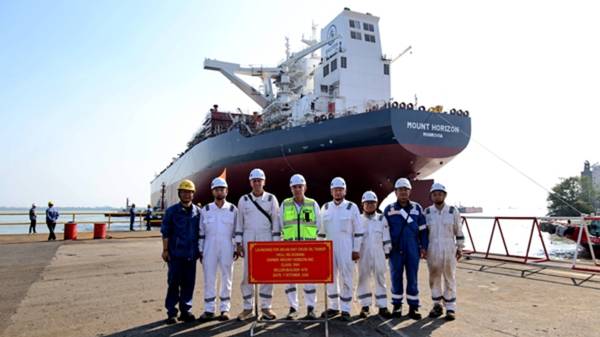
Launching ceremony of vessel with builder's hull no. 0330006. New Times Shipbuilding launches 299,500-DWT LNG dual-fuel crude oil tanker  

Sixth vessel in series launched in Jiangsu province, China.

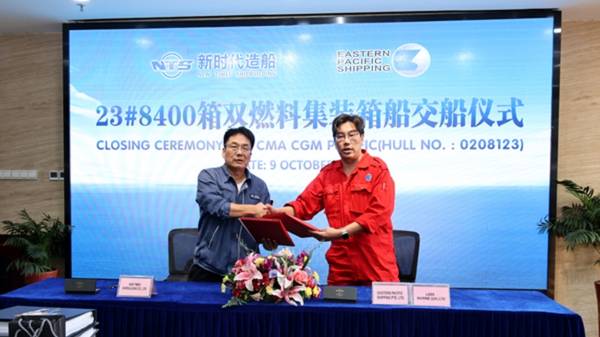
Closing ceremony of vessel with builder's hull no. 0208123. LNG dual-fuel boxship handed over to Eastern Pacific Shipping  

Closing ceremony held for 8,400-TEU vessel in Jiangsu province.

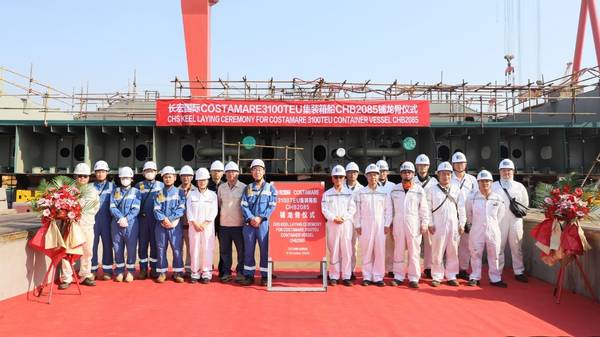
Keel-laying ceremony of vessel with builder's hull no. CHB2085. Changhong International lays keel of third 3,100-TEU boxship for Costamare Shipping  

Feeder vessel to feature scrubber system, supporting the use of high-sulphur fuel oil.

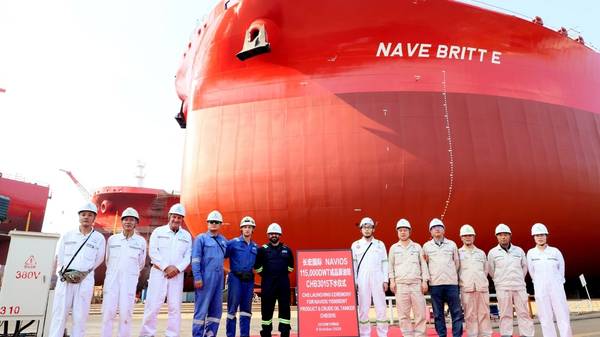
Launching ceremony of vessel with builder's hull no. CHB3015. Changhong International launches fifth 115,000-tonne product tanker for Navios  

Vessel is designed for future methanol or LNG use and includes provision for medium-voltage shore power.

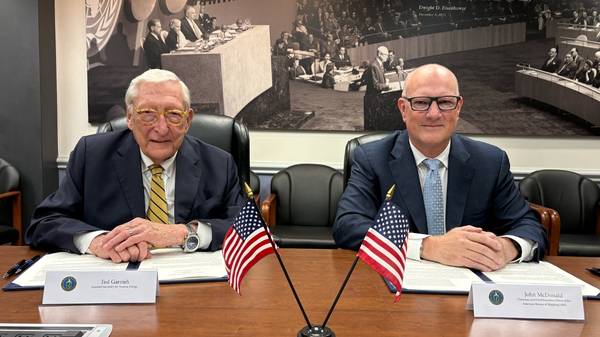
ABS and DOE sign MoU. ABS and US Department of Energy sign MoU on maritime nuclear applications  

Agreement covers floating nuclear power, nuclear-powered vessels and the port and shipyard infrastructure needed to support them.

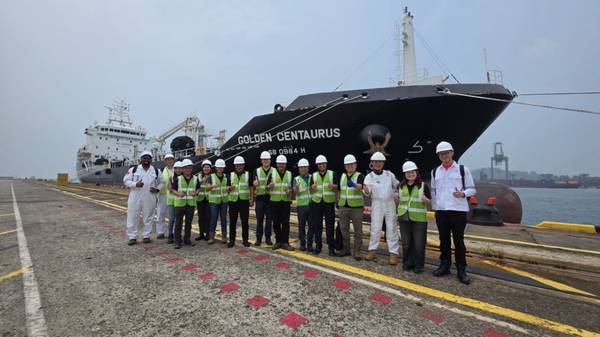
NMSSC visits Golden Centaurus. Singapore safety council inspects methanol bunker tanker Golden Centaurus  

NMSSC members 'encouraged' by integration of structural and operational safety into newly commissioned IMO Type II vessel.