This is a legacy page. Please click here to view the latest version.
Mon 17 Sep 2018, 12:55 GMT

Penguin orders 16 Enginei fuel management systems


Units to be used aboard a range of new maritime security vessels and multi-role crew boats.


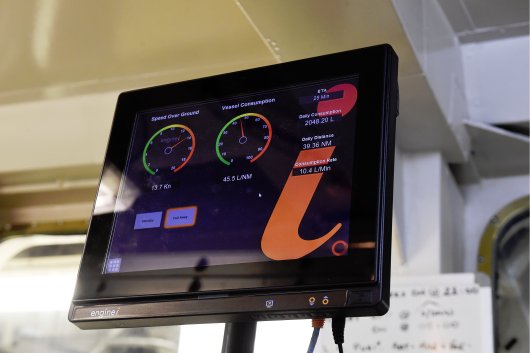
Ecospeed is designed to help ship operators identify and maintain optimum vessel speeds for efficient fuel usage. Its algorithm is based on speed modelling and an analysis of vessel operating data, correlating and synchronising information from different sensors installed on the vessel.
Image credit: Royston Diesel Power
Royston Diesel Power reports that Penguin International Ltd - the Singapore-based designer and operator of aluminium workboats - has ordered 16 of its Enginei electronic fuel management system (EFMS) units for a range of new specialist maritime security vessels and multi-role crew boats.

Penguin, the world's largest builder of mid-sized crew boats, is building several of its flagship Flex Fighter range of high-speed armoured security vessels for anti-piracy operations off the coast of Nigeria.

New Flex-42X multi-role crew boats will also be destined for its own chartering operations in Southeast Asia.

The Enginei systems are being supplied by Royston's local distributors for the Malaya region, CAN Traders and Service Pte. Ltd.

The units, which include Coriolis meters for the main engines and generators, are being installed as part of a comprehensive suite of advanced digital marine technologies, designed to offer enhanced long-term operational safety and efficiency performance.

Greater integration of advanced real-time information tools will be expected to contribute to reducing fuel and operational costs, enabling both the crews and vessel operators to have access to detailed real-time engine performance and other mission-critical information.

Enginei's sensor technology has been specified to accurately monitor engine fuel consumption, which will be tracked against GPS data, voyage details and operational mode.

The data is collected, processed and relayed to bridge and engine room-mounted touchscreen monitors to enable the vessel's master to adjust vessel speed and take whatever other actions are needed to reduce fuel consumption.

Penguin Group's managing director, James Tham, said: "After extensive evaluation, we decided to spec Enginei into our security boats and crew boats as a well-balanced EFMS solution for our owners."

Installation of the Enginei units is being carried out by Penguin's own team of engineers, while CAN Traders is overseeing the commissioning work.

Sean O'Neill, Royston's regional sales manager, noted that the optimisation of fuel use and the minimisation of emissions is an increasingly important issue in the international marine sector.

"We are seeing a lot of interest in our technology from global builders and operators who want to achieve measurable operational and cost savings for their vessels," he said.

According to Royston, Enginei EFMS is compatible with all marine engine types and can be interfaced with newbuild engine installations or retrofitted to operating vessel. Bunker monitoring applications are also available.

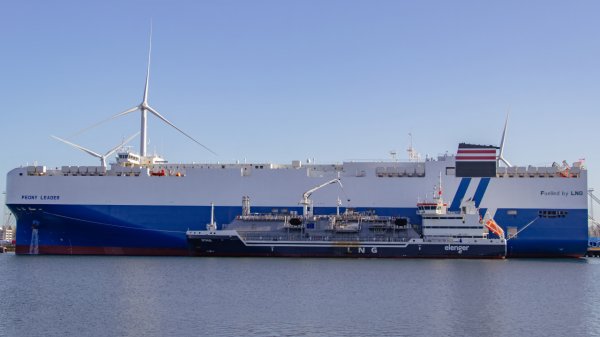
Current status of fleet fuel types chart. LNG-fuelled container ships dominate January alternative-fuel vessel orders  

Container ships accounted for 16 of 20 alternative-fuelled vessels ordered in January, DNV reports.

Rick Boom, CIMAC and Professor Lynn Loo, GCMD. GCMD and CIMAC sign partnership to advance alternative marine fuel readiness  

Two-year agreement aims to bridge operational experience with technical standards for decarbonisation solutions.

Renewable and low-carbon methanol project pipeline chart as of January 2026. Renewable methanol project pipeline reaches 58.2m tonnes by 2031, GENA reports  

Project Navigator Methanol tracks 275 projects, including e-methanol, biomethanol and low-carbon methanol facilities globally.

Petrobras logo. Petrobras adjusts bunker pricing and minimum order volumes at Santos  

Brazilian supplier discontinues volume discount tier and lowers minimum order quantity from 1 March.

Viking Grace vessel. Viking Line secures biogas supply for 2026 after tenfold increase in biofuel use  

Åland-based ferry operator aims to maintain 50% biogas blend throughout the year on two vessels.

GNV Aurora vessel. GNV takes delivery of second LNG-powered vessel Aurora from Chinese shipyard  

Vessel to enter service on Genoa–Palermo route in April, completing first fleet renewal phase.

Tangier Maersk vessel. Maersk takes delivery of first methanol-capable vessel in 9,000-teu series  

Tangier Maersk is the first of six mid-size container ships with methanol-capable dual-fuel engines.

IBIA MFM bunkering training course graphic. IBIA to run surveyor training course for mass flow meter-equipped bunkering in Rotterdam  

One-day course scheduled for 19 February aims to prepare professionals for MFM-equipped bunkering operations.

CO2 carrier vessel aerial view. MOL secures two 12,000-cbm CO2 carriers for Northern Lights expansion  

Japanese shipowner to deliver vessels in 2028 for cross-border carbon transport and storage project.

MOL and ONGC VLEC long-term charter signing. MOL and ONGC sign 15-year charter deal for two ethane carriers  

Japanese shipowner expands fleet to 16 vessels with newbuildings scheduled for delivery in 2028.


↑  Back to Top