This is a legacy page. Please click here to view the latest version.
Thu 13 Apr 2017, 11:53 GMT

Sovcomflot chooses WinGD engines for world's first gas-powered Aframax tankers


WinGD's X62DF dual-fuel engines with X-DF low-pressure gas injection technology to power four Sovcomflot ships.


Winterthur Gas & Diesel (WinGD) has announced that its low-speed dual-fuel engines with X-DF low-pressure gas admission will propel the world's first ever gas-fuelled Aframax crude oil tankers.

Under a contract signed in March 2017, Sovcomflot (SCF Group), Russia's largest shipping company, has chosen seven-cylinder, 62-centimetre bore type 7X62DF engines from WinGD's X-generation to propel a series of four LNG-fuelled Aframax-class tankers. The ships are to be built by South Korea 's Hyundai Heavy Industries (HHI) at its shipyard in Samho, while HHI's Engine & Machinery Division (HHI-EMD) in Ulsan have been contracted to build the 7X62DF engines.

The 7X62DF engines are rated 13,800 kilowatts (kW) at 86 revolutions per minute (rpm) and designed to operate on a choice of LNG, HFO, distillate or hybrid liquid fuels.

The engines are said to comply with IMO Tier III limits for oxides of nitrogen (NOx) in their gas fuel mode, and with IMO Tier II when burning liquid fuel. To enable IMO Tier III compliance on liquid fuel operating mode, the contract also specifies the supply of low-pressure selective catalytic reduction (SCR) after treatment systems for the 7X62DF engine.

As well as the engine designs, WinGD has also agreed to supply its Engine Diagnostic System, which targets increased availability via monitoring, lower fuel costs via engine performance optimising and extension of predicted Times Between Overhaul (TBO) of components.

Vessel details

The LNG-fuelled Aframax crude oil tankers have a capacity of 114,000 deadweight. The vessels are designed to ice-class 1A and are scheduled to operate primarily in the Baltic and North Seas. With the ability of the 7X62DF engines to meet IMO Tier III limitations on NOX and SOX in Emission Control Areas (ECAs) when operating on gas without after treatment, and when burning low sulphur liquid fuel with low-pressure SCR, the tankers are designed for worldwide trade, including ECAs.

SCF anticipates that the WinGD X-DF engines will deliver "substantial" emissions benefits as well as "excellent" total cost of ownership (TCO). To exceed rather than meet emissions legislation in the environmentally sensitive regions in which its fleet operates, SCF notes that marine engines running on LNG release over 90% less sulphur oxides (SOX), over 80% less nitrogen oxides (NOX), 15% less carbon dioxide (CO2) than those burning standard marine fuels. The ships' auxiliaries and boilers will also be equipped for operation on gas fuel.

On the TCO side, SCF acknowledges the benefits of the 7X62DF with low-pressure gas admission in terms of both capital expenditure (CAPEX) and operating expenditure (OPEX). As confirmed during their development programme, the X-DF engines are said to employ a lean air-gas mixture ignited by injection of a small amount of liquid fuel to achieve high fuel efficiency, very stable combustion and inherently low formation of NOX, allowing IMO Tier III compliance in ECAs without exhaust after treatment.

Reducing both CAPEX and OPEX, the low-pressure gas admission technology means that in contrast to engines with high-pressure gas injection, the gas fuelling system on the X-DF engines does not require high-pressure electrically-driven cryogenic pumps. This considerably reduces both the purchase and installation cost of the fuelling system and the consumption of electricity needed for injection of gas into the combustion chamber. As a result, there is also the potential to dimension a ship's auxiliary plant smaller for further CAPEX and OPEX savings.

Vote of confidence

In a statement, Martin Wernli, CEO at WinGD, said: "This order represents a vote of confidence in X-DF and a recognition from SCF Group and its partners of the benefits of low-pressure X-DF technology to both their business and the environment.

"Further, with this project the SCF Group has raised the bar for environmentally-friendly Aframax tankers. Overall the order for the 7X62DF for the gas-fuelled Aframax tankers is a very clear message that our low-pressure lean burn technology is becoming the industry standard for all LNG-fuelled vessels, and not just LNG carriers."

Additionally, WinGD said the WX72DF successfully passed the Type Approval Test (TAT) on 22nd March. To date, already seven engines have been built, all completing the respective shop tests (FAT).

"All X-DF engines are meeting and exceeding by far the requirements for Tier III NOx emissions. WinGD's X-DF concept with its low-pressure gas system provides advantages in terms of lower investment and operating cost. It allows also compact installation of a fuel gas handling system which convinces with its simplicity hence lower CAPEX and OPEX, thanks to the low gas pressure requirement. The measured NOX emissions are far below the required Tier III limit," WinGD said.

Last week, Bunker Index reported that Shell Western LNG B.V. (Shell) had signed a contract to supply SCF's new gas-powered Aframax tankers. Shell will be refuelling the ships via a specialized LNG bunker vessel at the Gas Access to Europe (Gate) terminal in Rotterdam, Netherlands, and other supply points in the Baltic.

The 114,000-dwt tankers are scheduled to commence operating in the third quarter of 2018.

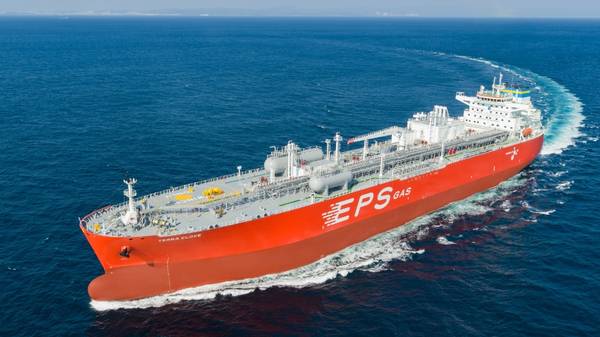
Image: The X62DF dual-fuel engines with X-DF low-pressure gas injection technology designed by Winterthur Gas & Diesel will power four ice class 1A, 114,000 dwt Aframax tankers of SCF Group.


Global Ethanol Association (GEA) and Vale logo side by side. Vale joins Global Ethanol Association as founding member  

Brazilian mining company becomes founding member of association focused on ethanol use in maritime sector.

KPI OceanConnect Logo. KPI OceanConnect seeks marine fuel trading intern in Singapore  

Bunker supplier advertises role offering exposure to commercial and operational aspects of marine fuel business.

Frank Dahan, CSL Group. CSL Group's Frank Dahan appointed chair of IBIA's Americas regional board  

Dahan brings 29 years of marine transportation and energy experience to the role.

IMO Member States, Belgium delegation. Lloyd's Register, EXMAR, and Belgium’s Federal Public Service develop interim guidelines for ammonia cargo as fuel  

Guidelines expected to receive formal IMO approval in May 2026, enabling ammonia use on gas carriers.

Knut Ørbeck-Nilssen, DNV. DNV to lead Nordic roadmap Phase 2 for zero-carbon shipping transition  

Programme will identify green corridors and tackle cost barriers through new financing approaches.

Monjasa logo. Monjasa seeks trader for Dubai operations  

Marine fuel supplier recruiting for trading role covering sales, purchasing, and logistics in UAE.

IBIA Board Elections 2026 – Call for Nominations announcement. IBIA calls for board election nominations ahead of Friday deadline  

Association seeks candidates for 2026 board positions with submissions closing 12 December.

Fraua vessel. BMT Bunker adds tanker MT Fraua to fleet  

BMT Bunker und Mineralöltransport has expanded its fleet with a new vessel.

Ruby bunkering vessel. Island Oil expands Cyprus bunkering fleet with vessel Ruby  

Island Oil adds second bunkering vessel to strengthen marine fuel supply operations in Cyprus.

Wärtsilä and Aalto University partnership signing. Wärtsilä and Aalto University extend R&D partnership to accelerate marine decarbonisation  

Five-year agreement expands international collaboration on alternative fuels and clean energy technologies.


↑  Back to Top


 Recommended