Classification society
Bureau Veritas (BV) says it has played "a major role in pioneering LNG in ship-to-ship bunkering" and has been "supporting the adoption of clean fuel LNG" after the vessels involved in the world's first ship-to-ship LNG bunkering operation between two independent ocean-going vessels were both classed by the Paris-headquartered organization.
Earlier this month, on 3rd September,
Terntank Rederi's
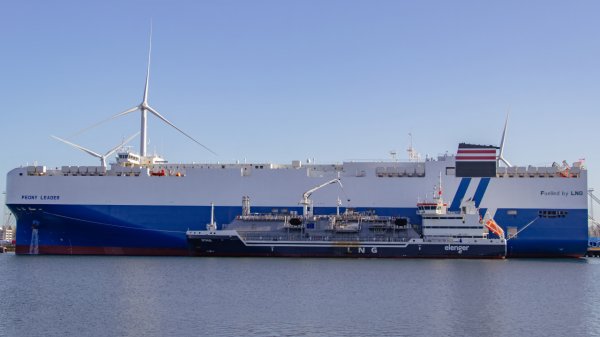
M/T Ternsund bunkered LNG from the
Coral Energy, a Dutch small-scale LNG vessel owned by
Antony Veder and chartered by
Skangas. The operation was carried out at the entrance to the port of
Gothenburg.
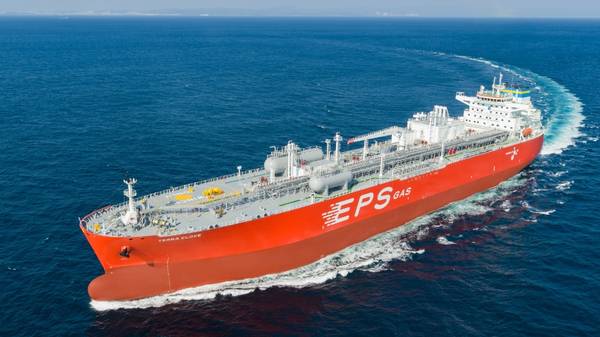
The 15,000-deadweight-tonne (dwt) Ternsund is the world's first LNG-fuelled newbuilding oil/chemical tanker. It was built under BV class at Avic Dingheng, China, and delivered to Terntank at the end of June 2016. Coral Energy, which has a capacity of 15,600 cubic metres, is also built to BV class and was delivered in 2013.
Using liquefied natural gas rather than heavy fuel oil lowers emissions and ensures compliance with stringent low-emission areas established in northern Europe and North America.
Ship-to-ship bunkering is considered by the industry to be a key to the adoption of LNG as a marine fuel. It is the standard bunkering mode adopted by the shipping industry for refuelling ships, but this month's operation is the first time ever that a cryogenic fuel has been ship-to-ship bunkered. It opens the way for ship-to-ship bunkering around the world, as unlike a fixed LNG terminal, the bunker vessel is not dependent on location, and can offer LNG as fuel to any receiving vessel.
Jean-Francois Segretain, Technical Director, Marine & Offshore Division, Bureau Veritas, said: "The ship-to-ship bunkering between Ternsund and Coral Energy represents a significant milestone in the adoption of LNG as marine fuel. Bureau Veritas has facilitated this major step through our dedicated rules and active participation in development of new international guidelines that encourage the adoption of clean fuel and enhance designs for new clean vessels.
"This first LNG ship-to-ship bunkering operation will soon be followed by other LNG ocean-going bunker vessels classed by Bureau Veritas. These include
ENGIE bunker vessels operating from Zeebrugge, and a
Sirius Veder Gas AB new bunker vessel under construction at Dutch shipyard Royal Bodewes."