This is a legacy page. Please click here to view the latest version.
Thu 11 Aug 2016, 00:02 GMT

Delivery of world's largest ethane carrier: it burns LNG, methane, HFO, MGO... and soon ethane


Owner confirms that it is 'very well advanced' towards also making the vessel ethane-ready.


The first of the four Navigator Gas Ltd ethane/ethylene midsize vessels, Navigator Aurora, was delivered at Jiangnan Shipyard in Shanghai on 2nd August.

With a length of 180 metres, the newly built Navigator Aurora has a carrying capacity of 37,300* cubic metres (cbm), enabling the vessel to hold up to 20,000 tonnes of ethane/ethylene, making it the largest ethane/ethylene-capable vessel serving the global market.

The state-of-the-art vessel has been chartered for a minimum of 10 years to the European chemical group Borealis for the transport of ethane from the U.S. East Coast to Europe, with commercial operations scheduled to begin in the fourth quarter of 2016.

What also makes this vessel special is that her propulsion and electrical systems are designed to use liquefied natural gas (LNG) or methane as fuel, in addition to traditional heavy fuel oil (HFO) and marine gas oil (MGO).

Navigator Gas has also confirmed that it is "very well advanced in the process of adopting the main engines and software to allow the ship to burn ethane (C2) as a third fuel alternative".

"This will allow even greater economies for our customers as there is a choice of also using cargo as fuel when carrying ethane, which has only been possible on a few number of vessels in the past," the company said.

According to Navigator Gas, the main engine, which has a high pressure gas injection system, is "the most fuel efficient two-stroke engine on the market".

"This selection of engine and fuel gas system allow the ship to be extremely fuel efficient both when using normal fuels as well as when using LNG," the gas transportation specialist added.

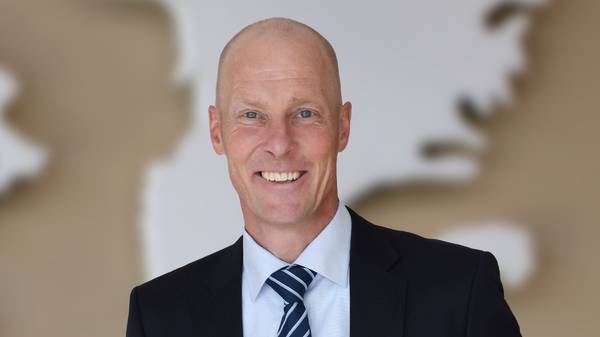
Commenting on the charter agreement with Navigator Gas, Markku Korvenranta, Borealis Executive Vice President Base Chemicals, said: "This state-of-the-art vessel is key to our efforts to secure a safe, cost-efficient and reliable supply of ethane for Borealis operations over the long term. We are pleased to have gained such an experienced partner with Navigator Gas. This project and the related investments underline our commitment to further strengthen our monomer position in Europe."

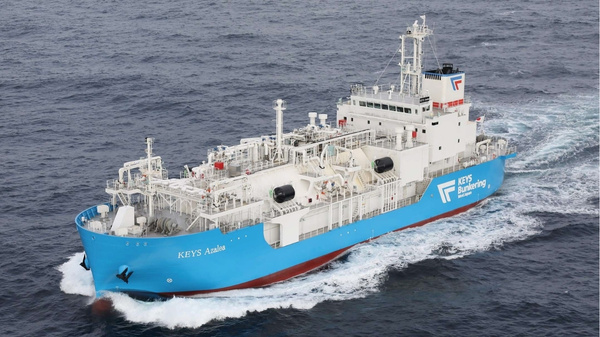
Image: Navigator Aurora

* Borealis Group claims the vessel has a total cargo tank size of 35,000 cubic metres (cbm).


Zhoushan waterfront at night. Zhoushan becomes world's third-largest bunker port  

Chinese refuelling hub overtakes Antwerp-Bruges and Fujairah to take third place in 2025.

Meyer Turku's net-zero vessel concept render. Meyer Turku completes net-zero cruise ship concept with 90% emissions cut  

Finnish shipbuilder’s AVATAR project vessel design exceeds IMO targets using technologies expected by 2030.

Uni-Fuels Logo. Uni-Fuels renews ISCC certification after first biofuel delivery  

Singapore-based marine fuel supplier completes inaugural ISCC-certified biofuel delivery, supporting EU regulatory compliance.

Close-up of a vessel bow at port. Iberian Peninsula poised to overtake the Netherlands as Europe’s top LNG bunkering hub  

Spanish and Portuguese ports quadrupled ship-to-ship LNG supply in two years, data shows.

FOBAS Fuel Insight Fuel Quality report H2 2025 cover. Lloyd’s Register reports sharp rise in marine fuel quality failures in late 2025  

December recorded the highest monthly off-specification cases, driven by sulphur, catalytic fines and flash point issues.

Bio-LNG bunkering infrastructure. Bahía de Bizkaia Gas launches bio-LNG loading service after ISCC certification  

Spanish regasification terminal begins offering renewable fuel loading for trucks and vessels in January 2026.

Grande Michigan vessel. Grimaldi takes delivery of eighth ammonia-ready car carrier Grande Michigan  

The 9,000-ceu vessel features 50% lower fuel consumption and 5 MWh battery capacity.

Graphic of the ABS logo with a blue background and light effects over a globe. ABS consortium delivers ammonia fuel safety report for EMSA  

Report expands on IMO interim guidelines and highlights need for comprehensive understanding of ammonia properties.

Green Future vessel. NYK operates methanol-fuelled bulk carrier for BHP, claims 65% emissions cut  

Green Future becomes first oceangoing bulk carrier to use low-carbon methanol fuel.

Genesis Sea vessel. Ulstein Verft completes sea trials for Genesis Sea CSOV ahead of spring delivery  

The 89.6-metre vessel features hybrid battery propulsion and preparations for green methanol operation.


↑  Back to Top